Self-Scheduling Tools: How Choice and Convenience Drive High-Value Patient Consultations
What to Know
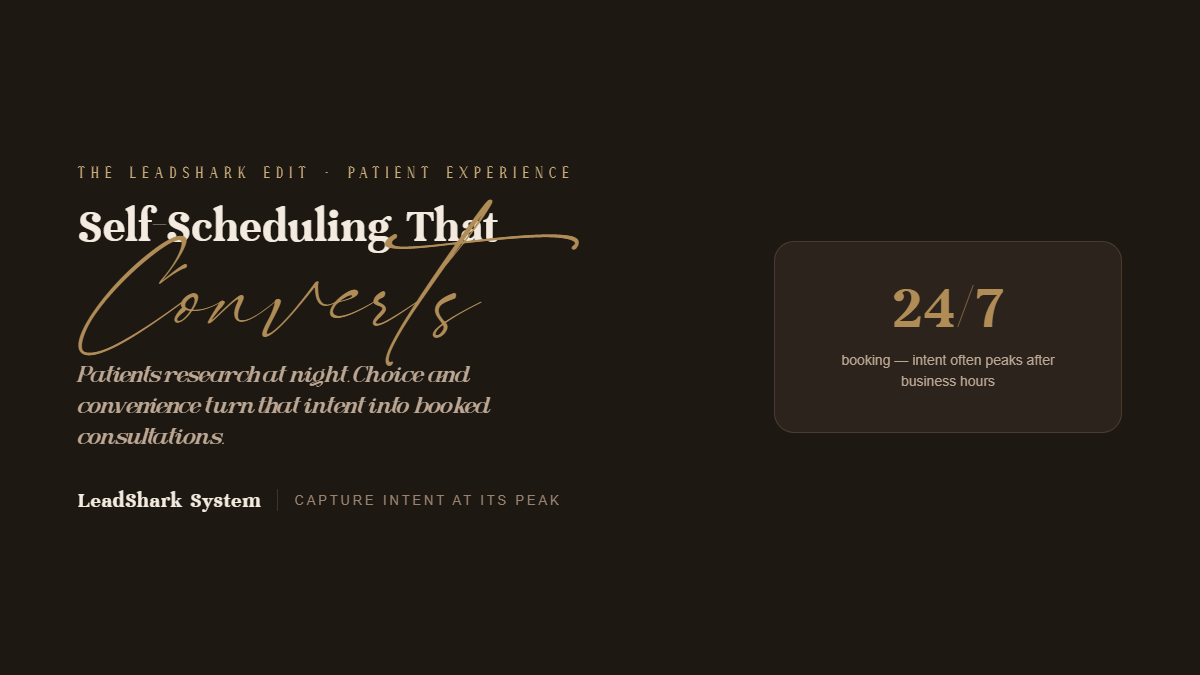
- Rising expectations: Patients expect online booking for medspas just like dining or travel. Yet many practices still rely on manual phone calls.
- After-hours demand: Booking intent peaks during evenings and weekends. Without self-scheduling, these leads often drop off.
- High-value flow: High-ticket consultation flows require convenience paired with quick qualification and a deposit.
Why it matters: The gap between patient booking preferences and medspa availability is a major operational leak. Patients researching treatments late at night will book elsewhere if forced to wait for morning phone calls.
Why Does Self-Scheduling Matter for High-Value Treatments?
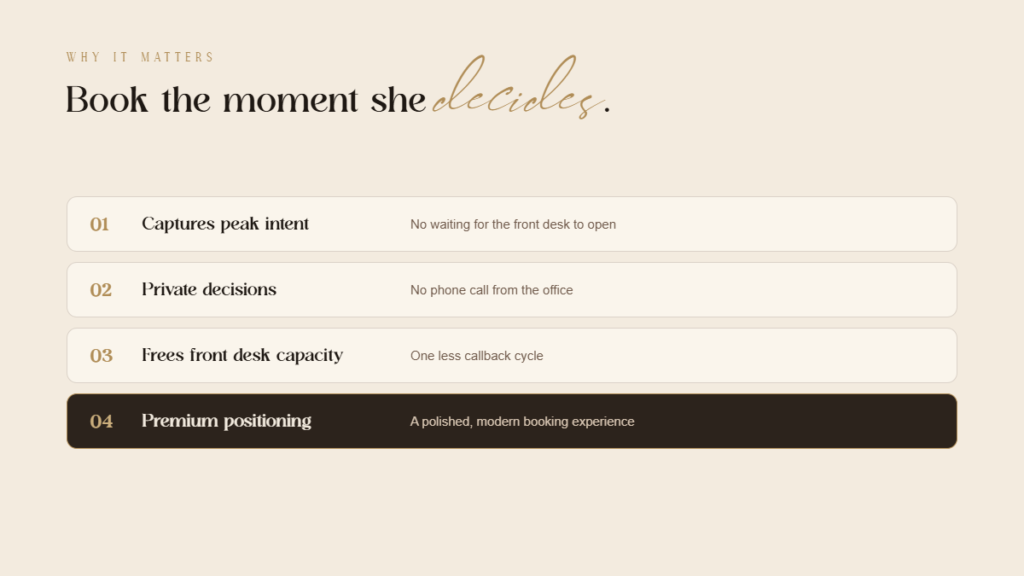
Captures peak intent: Allows patients to book immediately when decision intent is highest.
Lowers privacy barriers: Enables patients to schedule discreetly without making phone calls at work.
Frees staff capacity: Reduces phone traffic, voicemails, and manual follow-ups for the front desk.
Elevates brand perception: Modern booking workflows signal high operational standards.
What Does “Choice” Mean in a Self-Scheduling Flow?
The big picture: Choice increases commitment. Allowing patients to select specific options builds ownership over the appointment.
Choices that matter to patients:
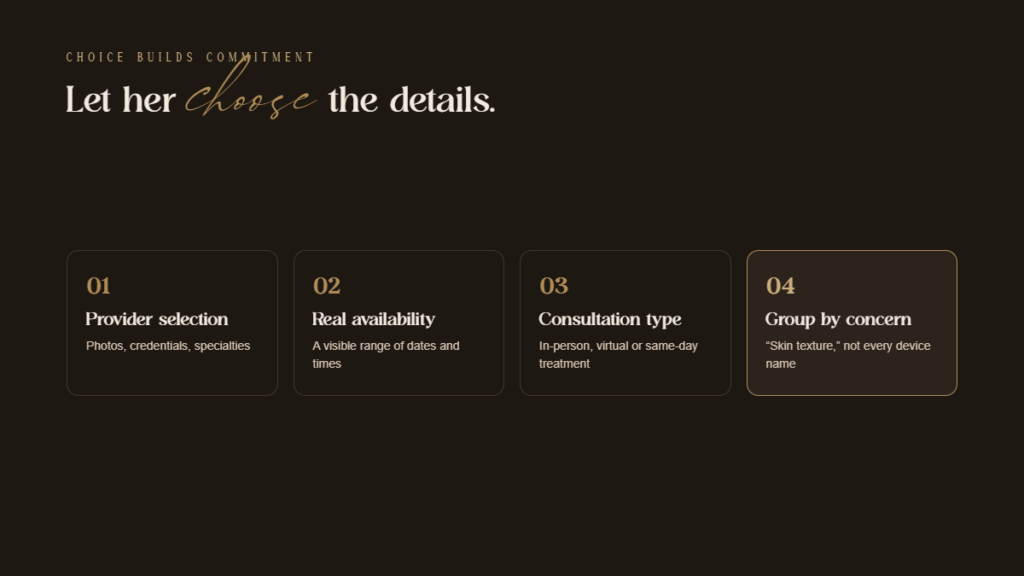
- Provider selection, with photos, credentials, and specialties
- Date and time across a visible range of real availability
- Consultation type: in-person, virtual, or combined with a same-day treatment
- Location for multi-site practices
- Treatment interest, so the consultation is prepared in advance
Avoid choice overload: Keep service menus concise. Group treatments by concern (e.g., “Skin texture” or “Volume loss”) instead of listing every technical device.
How Should Consultation Booking Differ From Routine Booking?
The distinction: Routine visits can be fully open, but high-value consultations require structured qualification.
An effective consultation flow:
- Concern-based entry point: “What would you like to improve?”
- Brief qualification questions: prior treatments, timeline, and general budget awareness
- Provider matching based on the treatment interest
- Pre-visit intake and consent sent automatically after booking
- A consultation deposit that is credited toward treatment if the patient proceeds
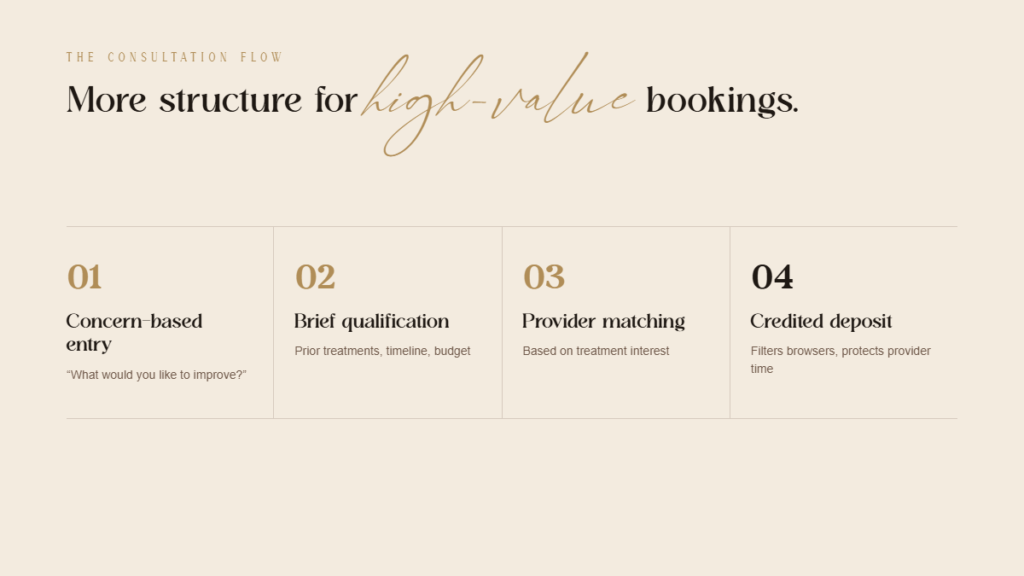
Why deposits work: They filter out casual browsers and protect provider availability, while crediting the fee toward treatment maintains goodwill.
What Features Should a Self-Scheduling Tool Include?
- Real-time availability tied to provider, room, and device resources
- Mobile-first design, since many patients book from their phones
- Embedded booking on the practice website rather than a redirect to an unfamiliar domain
- Card-on-file and deposit collection through secure payment processing
- Automated confirmations and reminders by SMS and email
- Digital intake and consent linked to the patient chart
- Waitlist automation to fill cancelled slots
- Health privacy safeguards and a signed health privacy agreement
How Can Practices Increase Self-Scheduling Adoption?
- Place “Book Now” buttons on every treatment page and in the site header
- Add booking links to the Google Business Profile, Instagram bio, and email signatures
- Include booking links in ads, newsletters, and reactivation messages
- Train front desk staff to direct callers to online rebooking when appropriate
- Remove unnecessary steps, such as account creation before seeing availability
What Should Practices Measure?
- Share of appointments booked online over time
- Booking conversion rate from the booking page
- After-hours bookings as a share of total online bookings
- Consultation-to-treatment conversion for self-scheduled vs. phone-booked consultations
- No-show and cancellation rates by booking channel
- Drop-off points within the booking flow
By the numbers: Internal baseline data is the clearest benchmark. Track key metrics before and after implementation to measure return on investment.
The Bottom Line
The takeaway: Self-scheduling tools that offer clear choices, mobile ease, light screening, and deposit protection convert late-night interest into high-value bookings.
The practices that benefit most treat online booking as a designed patient experience, not a calendar widget, and measure it as closely as any other revenue channel.
ready to grow & scale












more
about us
For brands looking for a branding, website and social media facelift...
The Aesthetic Website

learn more
For brands looking to SCALE & GROW their existing aesthetic business with more booked appointments...
The Aesthetic Accelerator

learn more
The client retention app for brands looking to maximize their client lifetime value and increase member retention
Juvvia




we are the creators of




REQUEST BETA ACCESS
follow us
chat with us
A data-driven performance marketing agency dedicated to helping aesthetic businesses scale and grow...
We Are LeadShark System

learn more

