The Ultimate Guide to Native Advertising and Sponsored Content for Aesthetic Practices
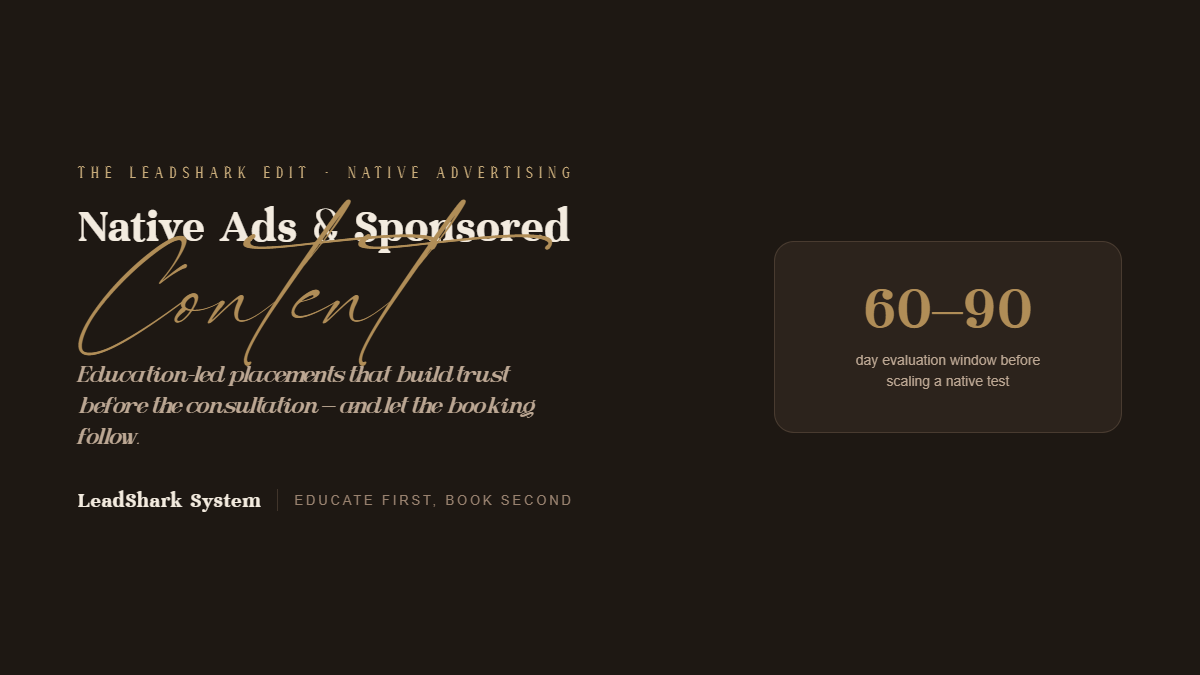
What to Know
- Native ads blend in: Sponsored articles and educational social posts reach patients who scroll past standard ads.
- Aesthetics take time: Patients research for weeks before booking. Useful content builds trust during that search.
- Disclosure is mandatory: Clear labeling protects your practice and complies with FTC and state medical board rules.
Why it matters: Traditional ads ask for a booking before building trust. Native advertising reverses that process by putting helpful content where prospective patients are already reading, bridging the gap between cold interest and a booked consultation.
What Exactly Counts as Native Advertising?
Native advertising is paid content designed to match the look and style of the platform where it appears.
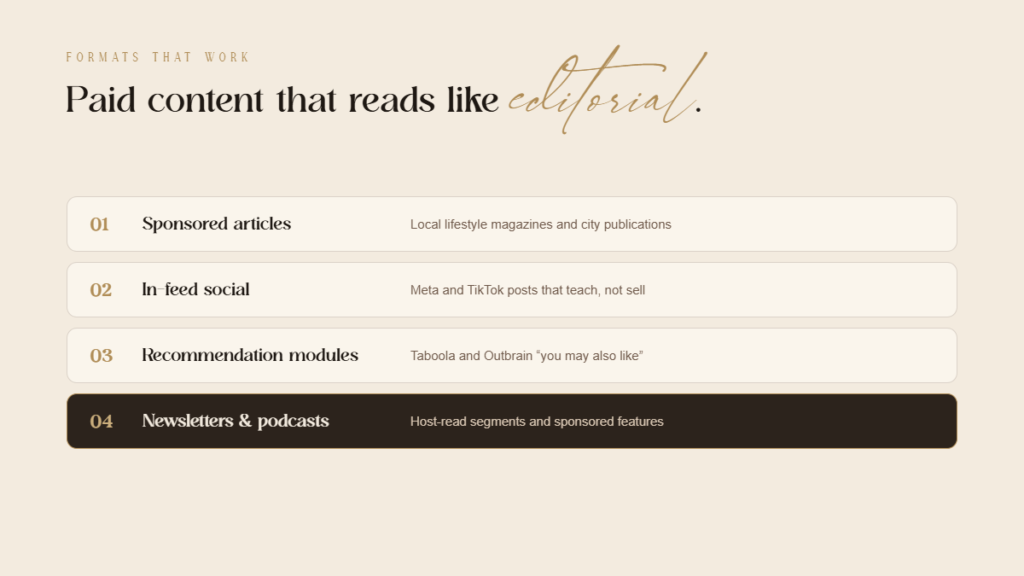
The formats we see work for aesthetic practices:
- Sponsored articles in local lifestyle magazines and news sites
- Educational social posts on Meta and TikTok
- Recommended reading links on major publishing websites
- Local email features in wellness or lifestyle newsletters
- Creator partnerships featuring real experiences with your practice
- Podcast host mentions on local or health-focused shows
Why Does Native Work So Well for Aesthetics?
Fits the decision path: Patients rarely book high-ticket treatments from a single ad. They research and compare first; native content meets them during that decision-making process.
Establishes authority early: Educational articles position providers as trusted experts before the first consultation.
Bypasses ad fatigue: Readers skip traditional banners, but they actively read informative, article-style content.
Supports premium pricing: Educational marketing attracts patients focused on provider expertise rather than deep discounts.
What Content Should a MedSpa Sponsor?
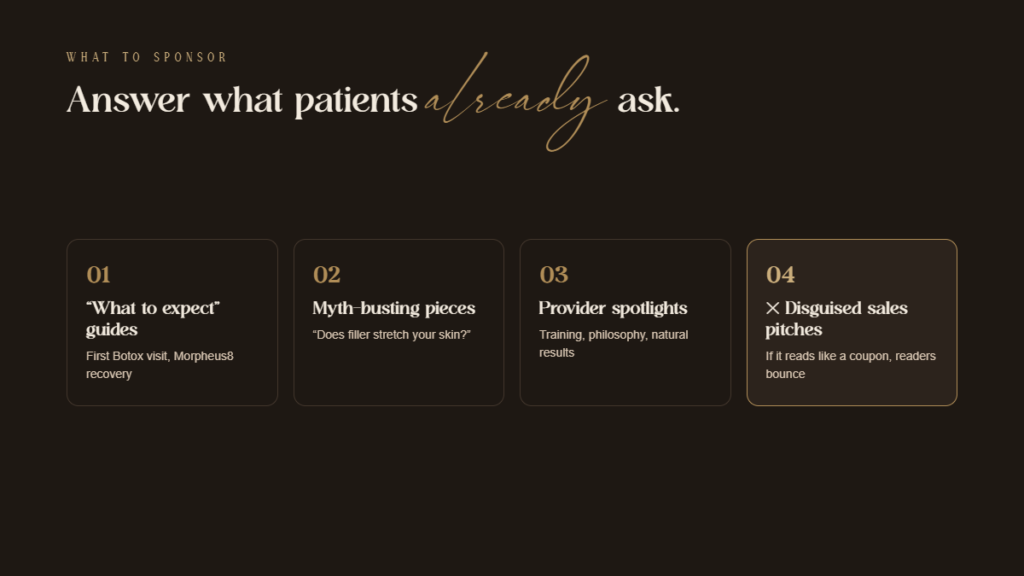
Effective native content directly answers common patient questions without feeling like a sales pitch.
Formats our clients use successfully:
- Treatment guides: Appointment expectations, recovery timelines, and procedure overviews
- Myth-busting: Addressing safety concerns, longevity, and common misconceptions
- Provider spotlights: Showcasing injector training, credentials, and philosophy
- Option comparisons: Comparing treatment types or identifying the right option for specific skin goals
- Seasonal advice: Timing treatments around seasons or major life events
What to avoid: Disguised coupons or aggressive promotions. Overly promotional content turns off readers and gets rejected by publishers.
What Are the Rules We Have to Follow?
Medical marketing requires strict adherence to legal and regulatory guidelines to avoid penalties and protect practice reputation.
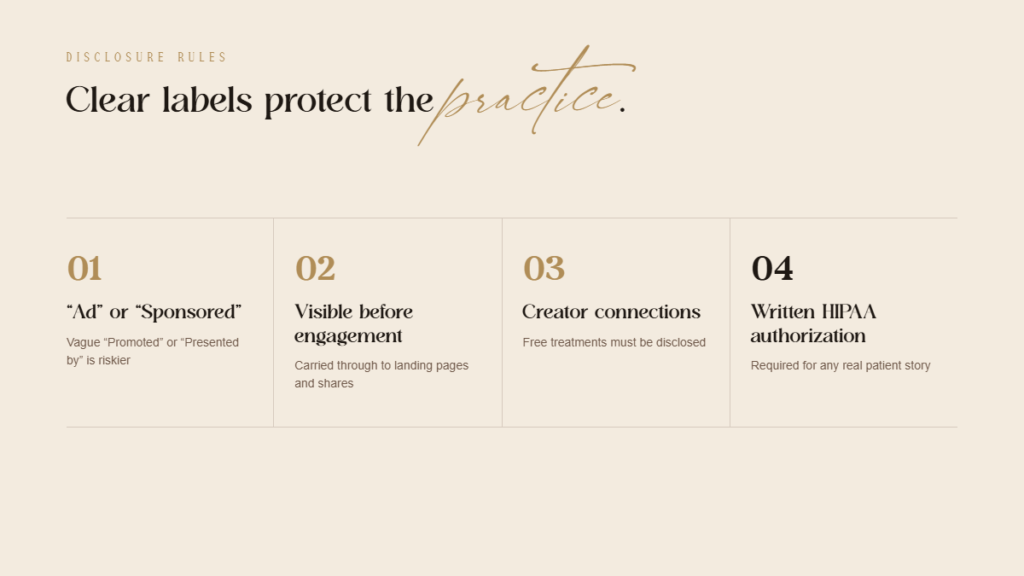
Clear labeling: Federal rules require explicit tags like “Ad” or “Sponsored.” Vague labels like “Promoted” are riskier.
Prominent placement: Disclosures must be visible before readers engage and carry through to landing pages.
Creator transparency: Free treatments or payment to influencers must be clearly stated. Practices share legal responsibility for paid statements.
Fact-backed claims: Results claims must be truthful. Avoid guaranteed outcomes or altered before-and-after photos.
State board compliance: State medical boards often enforce stricter advertising rules than federal authorities.
Patient privacy (HIPAA): Sharing patient stories, photos, or names requires signed written authorization.
How Do You Target the Right Audience?
Select the right publishers: Partner with local lifestyle outlets that match your target demographic rather than focusing purely on overall traffic numbers.
Leverage geographic and interest focus: Since health-related ad targeting is restricted on social platforms, rely on local targeting and compelling creative that attracts the right audience.
Follow up with engaged readers: Use follow-up ads with consultation offers for readers who spent time with your native content.
How Should Native Campaigns Be Measured?
Because native content rarely produces immediate bookings, evaluate performance across the full patient journey rather than looking only at immediate clicks.
The metrics we track:
- Reading time and scroll depth to measure content engagement
- Website traffic source tracking to identify top-performing placements
- Follow-up ad audience growth generated from article readers
- Multi-touch booking touchpoints recorded in tracking systems
- Cost per booked consultation calculated over a 30 to 90-day window
What Budget Makes Sense to Start?
Start with a focused test before committing a large marketing budget:
- Test 1–2 sponsored articles in a relevant local publication
- Run a modest social campaign promoting educational content
- Set up follow-up ads to convert engaged readers into consults
- Evaluate performance across a 60 to 90-day window before expanding
The Bottom Line
Native advertising succeeds for MedSpas because it aligns with how patients evaluate high-ticket medical treatments. Educating readers builds trust before asking for a consultation.
Take action: Ready to launch a compliant, education-led native campaign for your practice? Book a strategy call with LeadShark System to get started.
ready to grow & scale








more
about us
For brands looking for a branding, website and social media facelift...
The Aesthetic Website

learn more
For brands looking to SCALE & GROW their existing aesthetic business with more booked appointments...
The Aesthetic Accelerator

learn more
The client retention app for brands looking to maximize their client lifetime value and increase member retention
Juvvia




we are the creators of


REQUEST BETA ACCESS
follow us
chat with us
A data-driven performance marketing agency dedicated to helping aesthetic businesses scale and grow...
We Are LeadShark System

learn more

