The Power of Online Consultations: How Virtual Triage Increases In-Person Appointments
What to Know
- Drives real visits: Virtual consults do not replace clinic visits. They turn hesitant leads into booked in-person appointments.
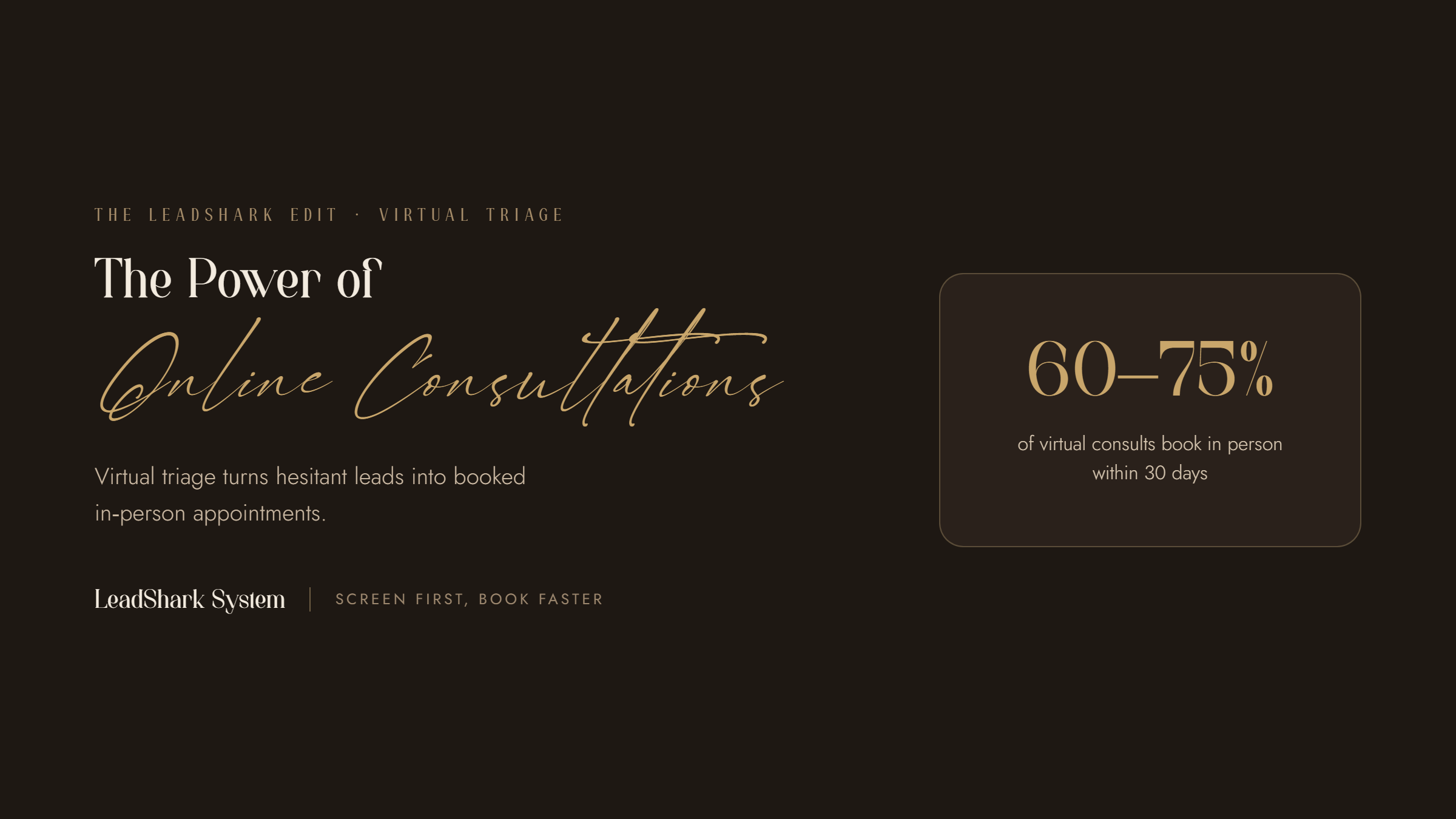
- Higher conversion rates: Practices running virtual screening see 60% to 75% of patients book in person within 30 days, compared to just 5% to 15% for online contact forms.
- Photos build trust: Reviewing photos before the call enables tailored advice, boosting patient confidence and speeding up bookings.
Why it matters: Virtual consultations are the most underused patient acquisition tool in aesthetic medicine.
The big picture: Virtual consults are not medical treatments. They are short screening calls that build trust and fill clinic calendars.
Why Virtual Consults Outperform Web Forms
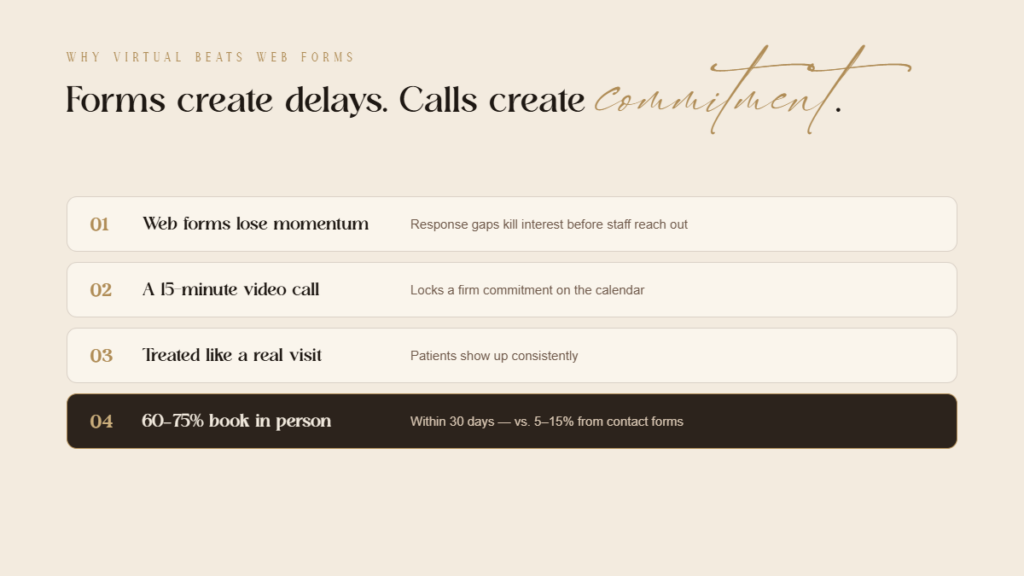
Web forms create delays: Response gaps cause prospective patients to lose interest before a staff member reaches out.
Video calls lock in interest: Scheduling a 15-minute video call secures a firm commitment on the calendar right away.
Commitment drives attendance: Patients treat scheduled virtual consults as real appointments and show up consistently.
Wider geographic reach: Virtual screening lowers friction for patients living 30 to 60 minutes away, expanding your market radius.
The 4-Step Virtual Consultation Framework
Core objective: Keep virtual consults focused on one goal: determining if the patient is a good candidate and ready for an in-person visit.
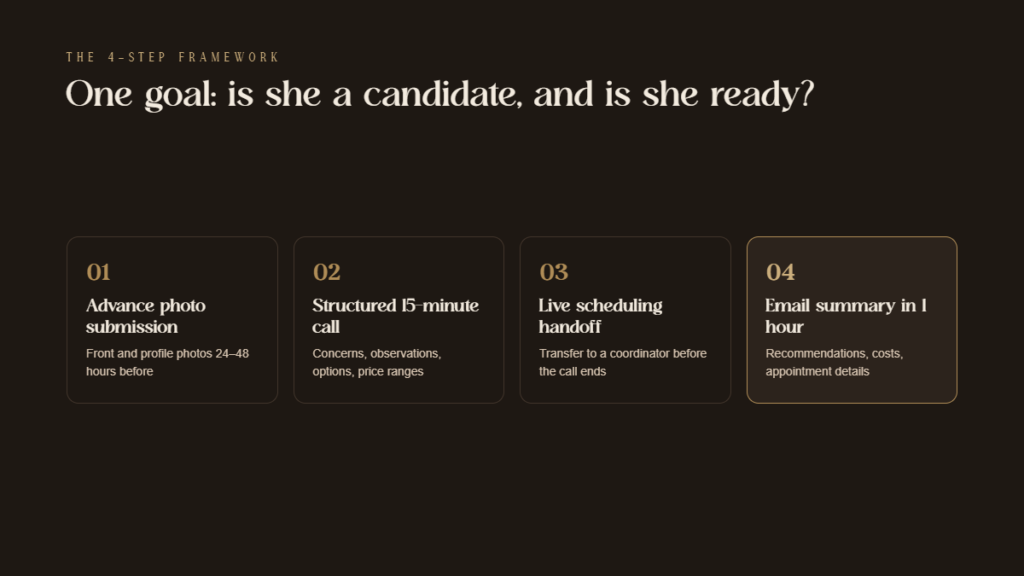
1. Advance photo submission: Request clear front and profile photos 24 to 48 hours before the call for provider review.
2. Structured 15-minute call: Review patient concerns, share observations, outline options, and provide pricing ranges.
3. Live scheduling handoff: Transfer the patient directly to a coordinator before ending the call to book the visit.
4. Fast email summary: Send a clear summary of treatment recommendations, costs, and appointment details within one hour.
Ideal Candidates for Virtual Consultations
Distance patients: Patients living 30 to 60 minutes away who want information before driving in.
Researchers: People who have spent months researching treatments and need professional validation.
First-timers: New patients seeking reassurance about treatment options and procedures.
Comparison shoppers: Prospects evaluating multiple clinics who appreciate immediate, expert advice.
HIPAA Compliance Requirements
Why compliance matters: Patient privacy rules require software vendors to sign formal data privacy agreements before handling health video calls or photos.
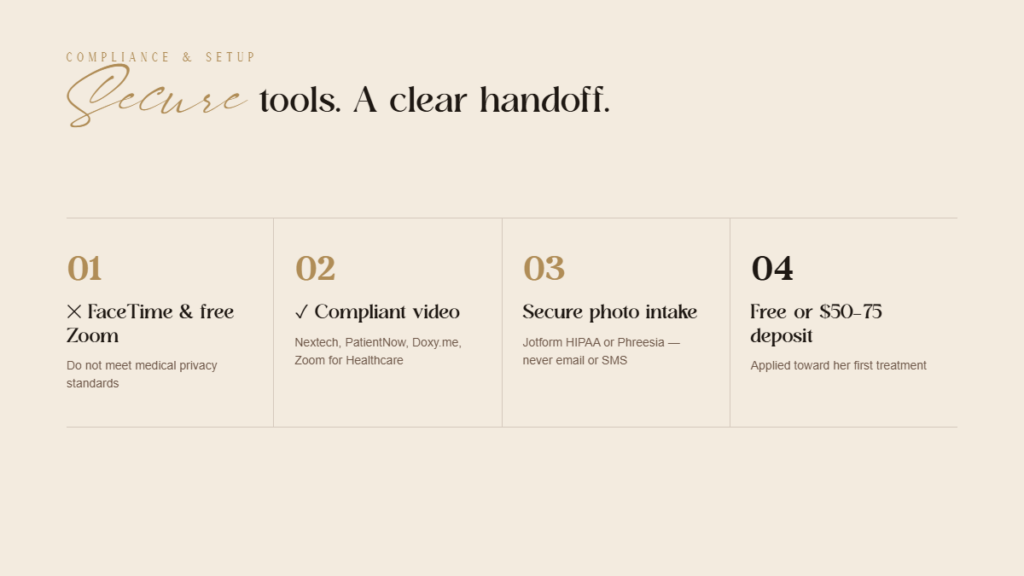
Non-compliant platforms: Standard FaceTime and basic free Zoom accounts do not meet medical privacy standards and should not be used.
Compliant tools:
Medical software: Nextech, PatientNow, Aesthetic Record, and Jane App feature built-in video consulting.
Doxy.me: A free, secure telehealth platform that requires no patient app downloads.
Zoom for Healthcare: A dedicated enterprise plan designed for medical privacy compliance.
Secure photo intake: Collect photos using secure intake tools like Jotform HIPAA or Phreesia rather than email or SMS.
Marketing & Pricing Strategy
Pricing model: Offer virtual consults for free, or charge a $50 to $75 deposit that applies directly toward their first treatment.
Best marketing channels:
Website: Place prominent virtual consultation buttons on key treatment pages.
Social ads: Use low-friction virtual consult offers to boost ad conversion rates.
Search ads: Add “Free Virtual Consultation” callouts to stand out from local competitors.
Email campaigns: Invite inactive email leads to a quick 15-minute consultation to restart conversations.
The Bottom Line
Why it works: Virtual triage bridges the gap between initial interest and booking a real appointment.
The impact: Practices increase overall booking rates, widen their geographic reach, and filter leads efficiently.
The impact: Practices using this strategy increase inquiry conversion rates, expand geographic reach, and filter out unqualified visits before in-person appointments occur.
Simple setup: You only need a secure video tool, photo intake form, calendar slots, and a clear staff handoff process.
Simple setup: All you need is a compliant video platform, a photo submission form, dedicated calendar slots, and a front-desk handoff protocol.
Get started: Our team at leadsharksystem.com builds virtual consultation workflows for MedSpas. If your lead conversion rate is under 40%, virtual consults offer the fastest path to growth.
ready to grow & scale








more
about us
For brands looking for a branding, website and social media facelift...
The Aesthetic Website

learn more
For brands looking to SCALE & GROW their existing aesthetic business with more booked appointments...
The Aesthetic Accelerator

learn more
The client retention app for brands looking to maximize their client lifetime value and increase member retention
Juvvia




we are the creators of



REQUEST BETA ACCESS
follow us
chat with us
A data-driven performance marketing agency dedicated to helping aesthetic businesses scale and grow...
We Are LeadShark System

learn more

