The Regenerative Revolution: Marketing Biostimulators and Exosomes Over Traditional Fillers
What to Know
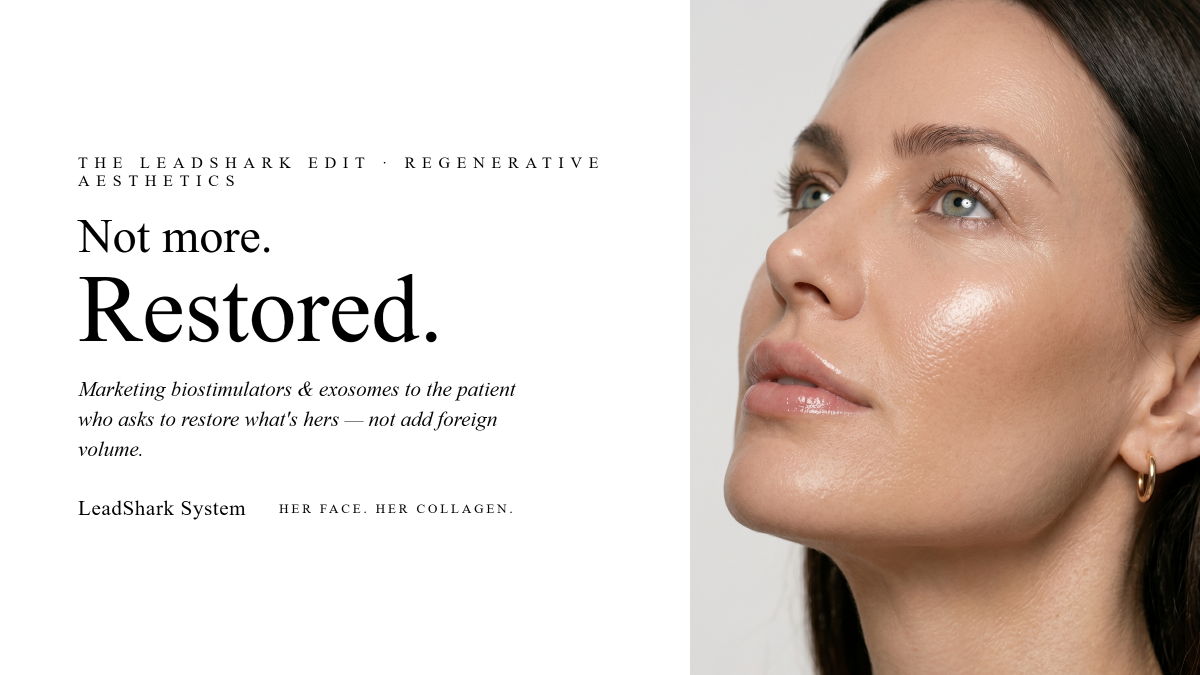
- The filler-era patient is evolving. A meaningful segment now asks to restore what’s theirs, not add more volume.
- Biostimulators like Sculptra and Radiesse recruit the body’s own collagen instead of depositing foreign volume. Results can last two to five years.
- Practices building clinical authority in regenerative aesthetics now are entering a premium category that discount-driven competitors can’t follow into.
Fillers
The patient who drove the filler era is still in the market. She’s also more discerning about what she puts in her face, how natural it looks, and how long it lasts. The practices that understand this shift are building premium positioning in a category with almost no promotional competition.
Why Is Regenerative Aesthetics Growing So Fast?
It’s not a rejection of traditional aesthetics. It’s an evolution.
Hyaluronic acid fillers solved a real clinical problem: immediate volume restoration for patients with measurable deflation. They remain critically important. But a meaningful patient segment has moved beyond the immediate-volume priority. They’ve processed the wave of content about “filler fatigue,” “migration,” and the overfilled aesthetic that defined early 2020s celebrity culture. They’re asking for something different. Not more. Restored.
Biostimulators and exosomes answer that patient. They command a price point, a patient relationship, and a clinical margin that HA filler, increasingly commoditized and promotion-driven, cannot match.
How Do Biostimulators Work Differently?
HA fillers act like an internal cushion. They provide immediate volume that eventually dissolves, leaving your own tissue unchanged.
Biostimulators act like a fertilizer. They trigger your body to grow its own natural support structure (collagen and elastin), leading to results that are literally part of you.
- Sculptra: Rebuilds collagen over weeks for natural results lasting up to five years.
- Radiesse: Offers immediate lift while simultaneously stimulating long-term collagen growth.
- Bellafill: A permanent solution for specific areas like deep folds and acne scars.
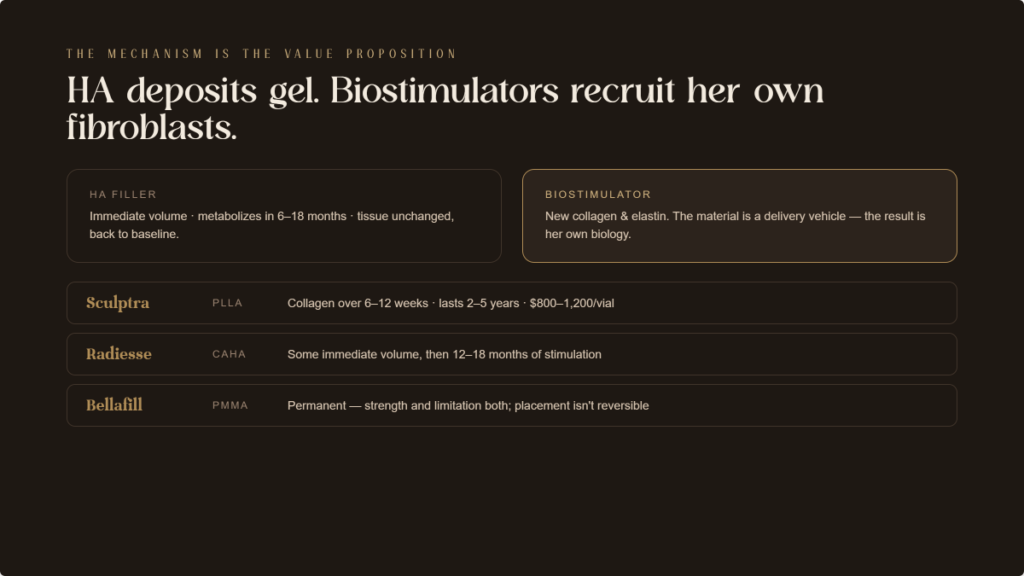
When a provider explains to a patient who has been asking for “a more natural look” that biostimulators build her own tissue, it typically ends the comparison to HA filler immediately.
What Are Exosomes and Where Do They Fit?
What they are: Tiny cellular messengers carrying repair instructions.
How they work: They signal your skin cells to work faster and heal more efficiently.
The Why: They turn invasive procedures into manageable treatments with superior results.
Two main clinical applications:
- Post-procedure recovery acceleration is the most established use. Applied immediately after Morpheus8 or CO2 laser, exosomes reduce recovery time, accelerate healing, and enhance collagen outcomes. Patients heal measurably faster.
- Standalone skin rejuvenation combined with microneedling, for patients not yet ready for aggressive resurfacing. Works well for early 30s patients focused on skin quality and prevention.
One important caution: The FDA has not cleared any exosome product for injection as a drug. Topical exosome products occupy a complex regulatory category. The compliant marketing frame is skin quality enhancement and accelerated recovery, not cellular regeneration claims that imply drug-level effects. Confirm exactly what your specific product is cleared for before marketing it.
What Patient Profiles Are Driving This Migration?
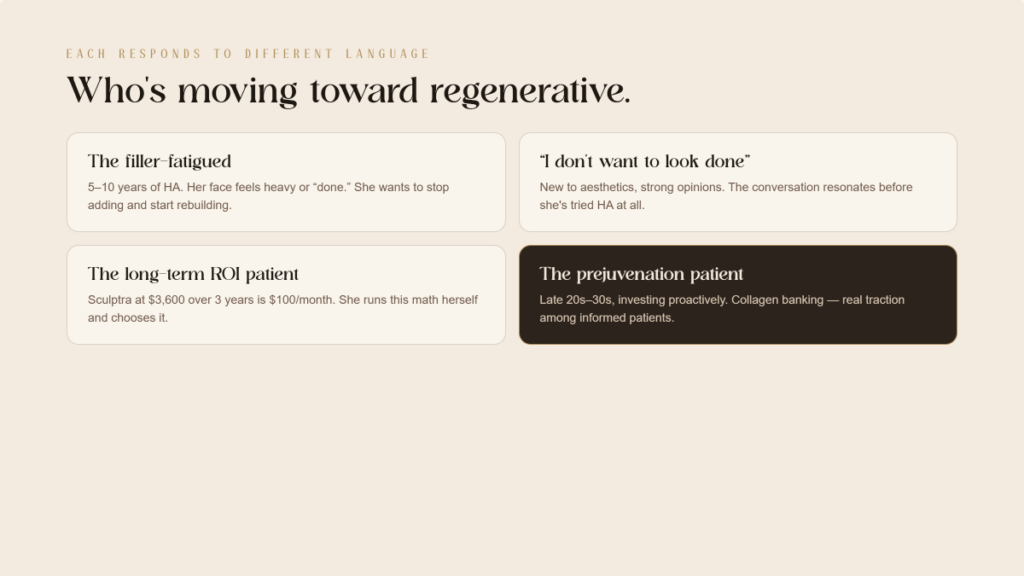
Four patient types are moving toward regenerative treatments. Each responds to slightly different language.
- Filler-fatigued: Long-term users who want to rebuild rather than just keep adding volume.
- Natural-First: New patients who value subtle, biology-driven changes over “obvious” enhancements.
- ROI Patient: Analytical spenders who prefer the 3-year value of biostimulators over annual filler maintenance.
- Prejuvenation Patient: Younger patients proactive about “collagen banking” to prevent future sagging.
How Should a Practice Market Biostimulators?
To succeed, practices must pivot their messaging from “filling a gap” to “restoring a foundation.”
- Pivot to Restoration: Focus on words like “collagen,” “structure,” and “biology” instead of “plump.”
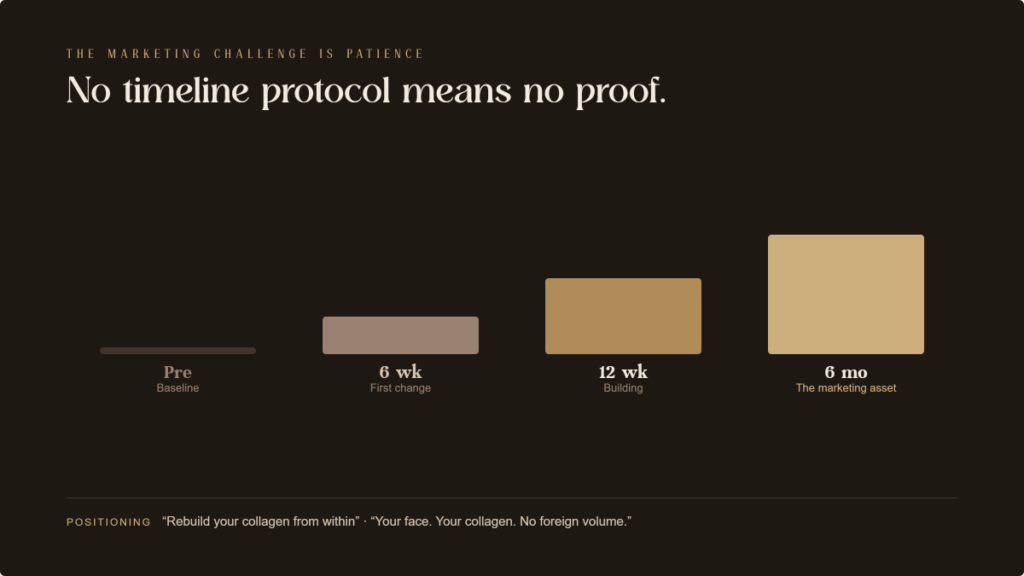
- Document the Journey: Use timeline photography (6 weeks to 6 months) to prove long-term efficacy.
- Consultative Education: Explain the “root cause” of aging—collagen loss—to justify the premium price.
What Are the SEO Opportunities in Regenerative Aesthetics?
The search landscape for biostimulators is significantly less competitive than for Botox and standard treatments. Most patients aren’t yet searching “Sculptra.” They’re searching symptom-and-outcome queries:
- Natural filler alternative
- How to rebuild collagen in face
- How to reverse filler migration
- Best treatment for gradual natural results
Two to three blog posts targeting these queries establish search authority in most local markets within 60 to 90 days. Exosome queries like “exosome treatment for skin rejuvenation,” “exosome vs. PRP for skin,” and “exosome facial before and after” have growing search volume with almost no local MedSpa content competing for them.
What Mistakes Kill Credibility in Regenerative Marketing?
- Overpromising Immediacy: Marketing biostimulators without explaining the 6-12 week wait time.
- Regulatory Risk: Making aggressive drug-level claims for exosomes.
- False Dichotomy: Positioning biostimulators as “instead of” fillers rather than a complementary tool.
- Race to the Bottom: Discounting premium regenerative treatments like commodities.
What Should a Practice Build This Quarter?
Five moves, in order of impact.
- Launch Timeline Photography: Standardize captures at 0, 6, 12, and 24 weeks.
- SEO Content Blitz: Publish the 3 key blog posts on natural filler alternatives.
- Provider Video Asset: Create a 90-second “how it works” educational video.
- Consultation Tooling: Deploy the 3-year ROI calculator in every consult.
- Exosome Integration: Add exosomes to all post-resurfacing clinical protocols.
The Bottom Line
The biostimulator and exosome category serves the most valuable segment of the patient pool: the one who prioritizes outcome quality over immediacy, understands that the best results look like her, and will invest meaningfully in a treatment that works with her biology rather than over it.
Practices that build clinical authority in regenerative aesthetics now are repositioning in a category that the discount-driven end of the market can’t follow. That positioning compounds every year as the regenerative category grows.
ready to grow & scale









more
about us
For brands looking for a branding, website and social media facelift...
The Aesthetic Website

learn more
For brands looking to SCALE & GROW their existing aesthetic business with more booked appointments...
The Aesthetic Accelerator

learn more
The client retention app for brands looking to maximize their client lifetime value and increase member retention
Juvvia




we are the creators of




REQUEST BETA ACCESS
follow us
chat with us
A data-driven performance marketing agency dedicated to helping aesthetic businesses scale and grow...
We Are LeadShark System

learn more

