The “Mommy Makeover” Economy: Marketing High-Ticket Surgical Alternatives Nationally
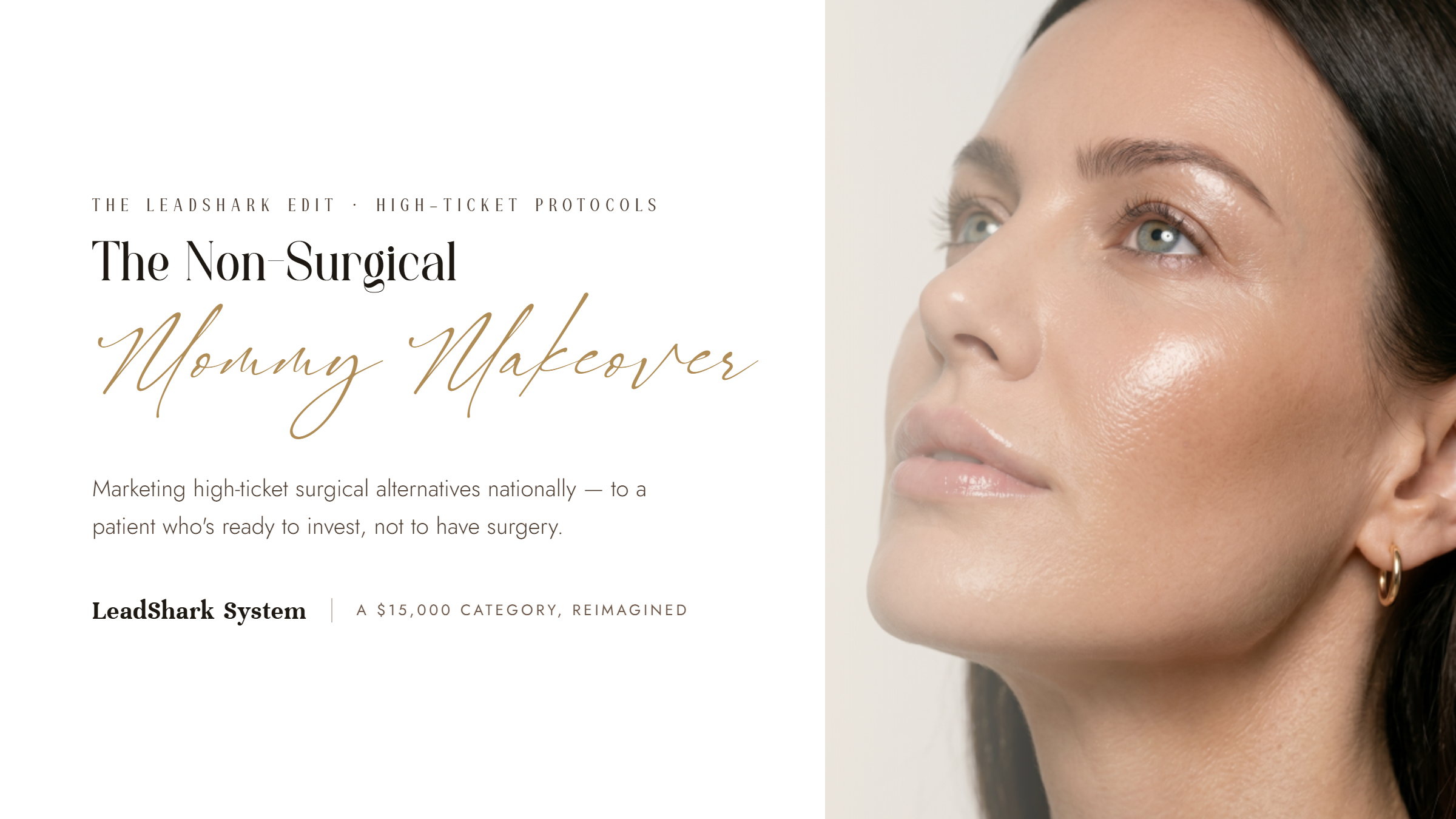
The mommy makeover is one of the most searched aesthetic procedures in the country. Most MedSpas are not marketing to it at all.
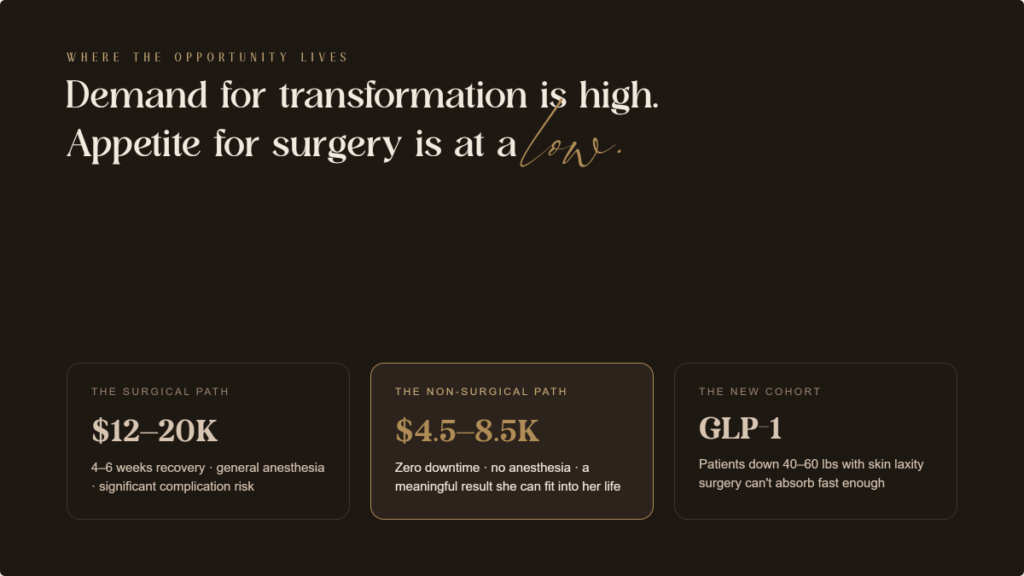
The assumption is that mommy makeover means surgery. Breast augmentation, tummy tuck, liposuction, the traditional four-to-six-hour procedure with six weeks of recovery and a $15,000 to $25,000 price tag. And since most MedSpas do not offer surgery, the assumption is that this patient is out of reach.
That assumption is costing practices real revenue. Because the patient searching “mommy makeover” is not always looking for surgery. More often, she is looking for the outcome: a body that feels restored after pregnancy, weight changes, or simply the passage of time. She wants firmer skin on her abdomen. She wants her clothes to fit differently. She wants volume where she has lost it and definition where it has softened. What she wants is the result. Surgery is just the version of that result she has heard of.
Non-surgical alternatives to the traditional mommy makeover are one of the fastest-growing segments in medical aesthetics. And in most markets, almost no one is marketing to this patient directly.
Who Is the Mommy Makeover Patient — and What Does She Actually Want?
She is not necessarily a new mother. The mommy makeover patient is a broad demographic: women between 30 and 55 who have experienced a meaningful body change – pregnancy, significant weight loss, the natural effects of aging – and are ready to invest in reversing it. She is often a dual-income household. She has delayed this decision, sometimes for years, because the surgery felt too dramatic, too expensive, or too disruptive to her life. She is not looking for a discount. She is looking for a way to get the result she wants on terms she can actually manage.
What she wants clinically is predictable. She wants her abdominal skin to be tighter. She wants to address the muscle separation or softening that pregnancy left behind. She wants volume restoration in areas that have hollowed, like, cheeks, temples, and décolletage. She wants skin quality improvements that make her feel like herself again. And in most cases, she wants all of this without general anesthesia, a surgical facility, a six-week recovery, or the fear of a result that looks altered rather than restored.
This patient does not need to be convinced that aesthetics matter. She has already decided to invest. The question she is asking is not whether to do something, but which practice to trust with the something she has decided to do.
Why Is the Non-Surgical Mommy Makeover a Category of Its Own?
Non-surgical mommy makeover is not a single treatment. It is a protocol, a sequenced combination of treatments that together address the full scope of post-pregnancy or post-transformation body changes. The reason it deserves to be marketed as a category is that patients are searching for it as one.
“Mommy makeover without surgery,” “non-surgical mommy makeover,” “tummy tuck alternative,” “how to tighten skin after pregnancy without surgery”- these are active, high-intent search queries with significant monthly volume nationally. The patient using these phrases has already done her research on surgical options. She has already weighed the cost and recovery. She is now specifically looking for the non-surgical path. The practices that have built content and positioning around this specific search intent are the ones she finds. The practices that have not are invisible to her.
The marketing opportunity is not just the volume of this patient. It is the intent. She is not casually curious. She has been thinking about this for months, often years. She is ready to move when she finds the right practice and the right framework. That is the highest-converting patient profile in the aesthetics category, and she is searching for non-surgical options in every market in the country.
What Does the Non-Surgical Mommy Makeover Protocol Actually Include?
The clinical framework maps to the patient’s actual concerns, not to a fixed list of devices.
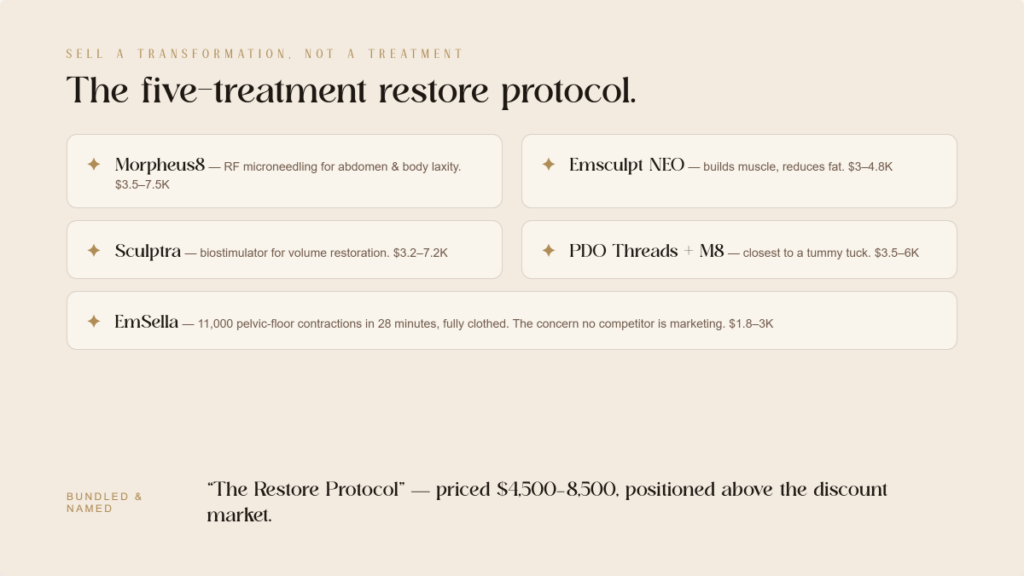
Skin tightening and texture. Radiofrequency microneedling treats the skin laxity on the abdomen, inner thighs, and arms that pregnancy or weight loss leaves behind. It stimulates collagen remodeling at a level that addresses both the surface texture and the underlying structural softening. For patients with mild to moderate laxity, results over a three-session protocol are meaningful without the downtime or scarring of surgery.
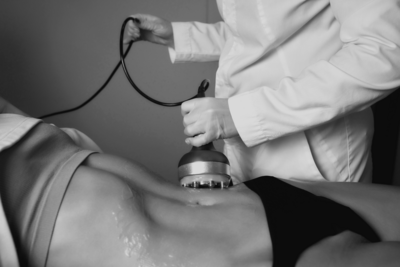
Muscle and body contouring. GLP-1 medications and pregnancy both create muscle loss alongside fat changes. High-intensity electromagnetic muscle stimulation combined with radiofrequency energy addresses both the residual fat and the muscle tone simultaneously. This is the non-surgical answer to the tummy tuck and liposuction combination that defines the surgical mommy makeover. The patient who completes a full protocol gains measurable muscle definition and fat reduction without a single incision.
Volume restoration. Post-pregnancy and post-weight-loss patients frequently experience facial volume depletion, like,hollowing of the cheeks, temples, and under-eyes that ages the face even as the body transforms. Biostimulators, treatments that rebuild the skin’s own collagen over time, address this gradual volume loss in a way that looks natural and lasts. This is often the highest-ticket component of the protocol and the one patients are least expecting to need when they come in asking about their abdomen.
Skin quality. Rapid body changes affect skin quality systemwide: texture, tone, hydration, and radiance. Monthly maintenance treatments address this layer and are the natural gateway to a membership, which is the ongoing structure that keeps the patient’s results maintained after the corrective phase is complete.
The power of the protocol is not any single treatment. It is the sequenced plan that gives the patient a clear roadmap: what gets addressed first, what follows, and what the maintenance phase looks like when the corrective work is done.
Why Does a Named Protocol Convert Better Than a Treatment Menu?
A patient who comes in asking about her post-pregnancy body does not know what she needs. She knows what she wants. A practice that presents her with a list of individual treatments, each requiring its own decision, its own price conversation, its own justification, is asking her to self-assemble a clinical plan she is not qualified to build.
A named protocol removes that friction. The “Post-Pregnancy Restoration Protocol” or “Non-Surgical Mommy Makeover” is a pre-packaged clinical pathway with a defined scope, a defined timeline, and a defined investment range. The patient is not choosing between treatments. She is choosing between staying where she is and starting the plan. That is a much simpler decision, and it closes at a significantly higher rate.
Named protocols also support higher investment conversations. A patient shown three individual treatments at $1,200 each is making three separate decisions about three separate expenditures. A patient shown a four-treatment protocol at $4,500 to $6,500 is making one decision about a complete outcome. The psychology is different. The resistance is lower. The consultation close rate is higher.
The practices generating the most revenue from this patient profile are not the ones with the most treatments on the menu. They are the ones that took the time to build a named, sequenced protocol and trained their clinical team to present it as a plan rather than a service offering.
What Makes Mommy Makeover Marketing Different From Standard Body Contouring?
Standard body contouring marketing targets a patient who wants to address a specific, isolated concern: a localized fat pocket, an area of stubborn resistance to diet and exercise. The message is about the treatment and the targeted result.
Mommy makeover marketing targets a patient who wants a transformation. The concern is not localized. It is systemic. She feels like her body does not reflect who she is anymore, and she wants to change that comprehensively, not one small area at a time. The marketing message that reaches her is not about a specific device or treatment. It is about restoration — getting back to a version of herself that pregnancy, weight changes, or time has moved her away from.
This distinction changes the content strategy entirely. Body contouring content focuses on mechanism: how the treatment works, what it targets, how many sessions are needed. Mommy makeover content focuses on outcome and identity: what it feels like to finish a protocol that addresses the full scope of what changed, what it means to look in the mirror and feel restored rather than altered, what the patient’s life looks like on the other side of the investment.
The emotional stakes are higher with this patient. The purchase decision is bigger. The content needs to meet her at that level — not with clinical feature explanations, but with an understanding of what she is actually carrying and what it would mean to put it down.
How Do MedSpas Build National Visibility in This Category?
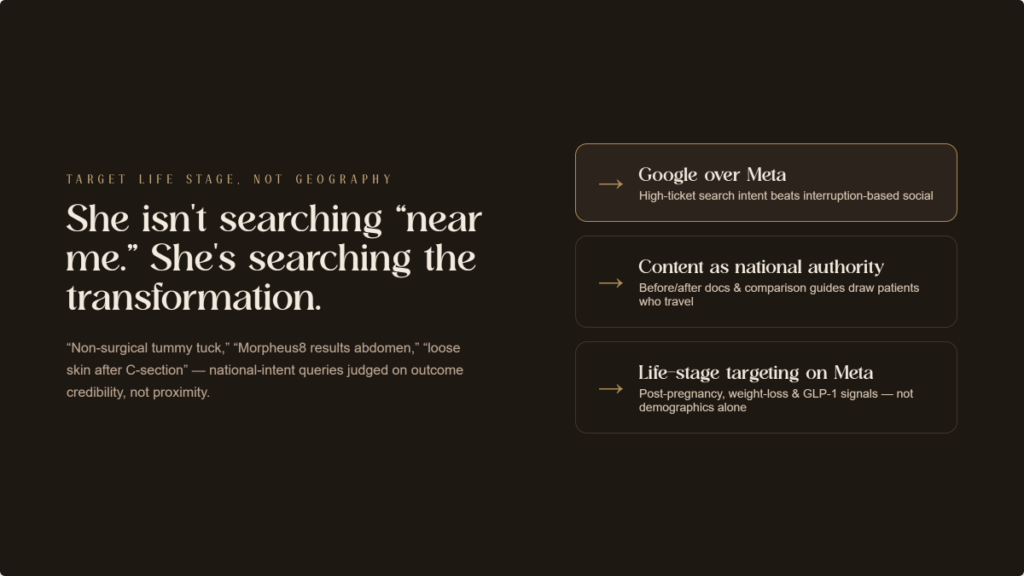
The search volume for mommy makeover-related queries is national, not local. A patient in Atlanta searching “non-surgical mommy makeover” and a patient in Phoenix searching the same phrase are both finding whatever content ranks for that query nationally, which may or may not be a local practice.
This creates an unusual content opportunity. Because so few MedSpas have built content specifically targeting non-surgical mommy makeover queries, the bar for national organic visibility in this category is lower than in almost any other high-intent aesthetic segment. Three to five well-structured, clinically authoritative pieces of content targeting the specific search phrases this patient uses will outperform the generic body contouring pages that most local practices have.
The content architecture that wins this segment follows the patient’s research path: a pillar page explaining the non-surgical mommy makeover concept and what it includes, treatment-specific supporting pages that address each component of the protocol in depth, FAQ content targeting the specific questions this patient asks (“How long does non-surgical skin tightening last?” “Can you tighten abdominal skin without surgery?”), and before/after documentation that shows realistic results with honest timelines.
For practices that also run paid search, the non-surgical mommy makeover keyword cluster is high-intent, relatively low-competition, and targets a patient with demonstrated willingness to invest at the high end of the aesthetics spectrum. It is one of the stronger paid search opportunities in the aesthetics category for practices positioned to serve it.
What Are the Biggest Mistakes Practices Make When Entering This Market?
No named protocol. Practices that have all the treatments required to serve this patient but present them as individual services are not effectively competing for this patient. She needs to see a plan. The treatment menu is not a plan.
Marketing to a surgical mindset. Content that tries to compete with surgery by comparing outcomes point for point is the wrong frame. The non-surgical mommy makeover is not a surgical mommy makeover that is less effective. It is a different category of intervention, one with a different risk profile, a different recovery experience, a different financial commitment structure, and a different type of result. The marketing should define the category, not defend it against surgery.
Ignoring the face. Most non-surgical mommy makeover content focuses exclusively on the body. The facial volume depletion that accompanies pregnancy and significant weight loss is one of the most emotionally significant concerns this patient has, and it is often the one she brings up in consultation once she feels comfortable. Practices that proactively address it in their content and consultation process unlock a treatment category this patient did not know to look for.
Underpricing the protocol. This patient is not price-sensitive. She is trust-sensitive. She has been thinking about this investment for a long time and she is prepared to spend accordingly with a practice that earns her confidence. A protocol priced too low signals that the practice does not understand the value of what it is delivering. The mommy makeover patient will pay for excellence. She is much less interested in bargains.
Treating her like a first-time patient. The consultation for this patient is not an introduction to aesthetics. She has done her research. She has likely consulted with a plastic surgeon already. She arrives at a non-surgical practice with context, questions, and a specific result in mind. Providers who treat her like a patient who needs the basics explained will lose her. Providers who meet her as the informed consumer she is — asking good questions, engaging with her specific concerns, presenting a plan that directly addresses what she has described — will close her and keep her.
The Bottom Line
The mommy makeover patient is one of the highest-value patient profiles in medical aesthetics: motivated, informed, financially prepared, and actively searching for a non-surgical path to a result she has been thinking about for years.
Most MedSpas are not building for her. They are not naming protocols for her. They are not publishing content that speaks to the full scope of what she is carrying or what restoration could look like on the other side of a real clinical plan. They are presenting treatment menus to a patient who came in looking for a plan.
The practices that build a named non-surgical mommy makeover protocol, create the content that reaches this patient during her research phase, and train their clinical team to present a comprehensive plan rather than individual service recommendations will find themselves in a virtually uncontested patient acquisition category. The demand is there. The patient is ready. The practices willing to show up for her specifically not as a body contouring candidate, but as someone who wants her full self back will own this market.
ready to grow & scale











more
about us
For brands looking for a branding, website and social media facelift...
The Aesthetic Website

learn more
For brands looking to SCALE & GROW their existing aesthetic business with more booked appointments...
The Aesthetic Accelerator

learn more
The client retention app for brands looking to maximize their client lifetime value and increase member retention
Juvvia




we are the creators of




REQUEST BETA ACCESS
follow us
chat with us
A data-driven performance marketing agency dedicated to helping aesthetic businesses scale and grow...
We Are LeadShark System

learn more

