Top 5 Features Every Med Spa Scheduling Software Must Have
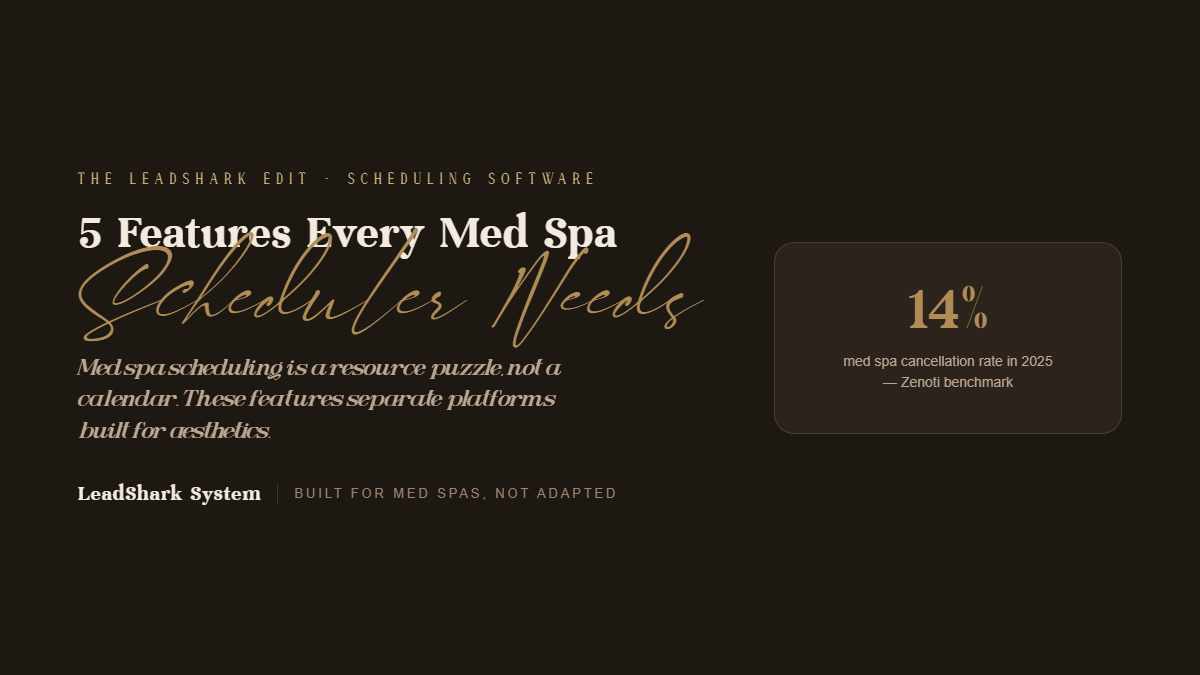
What to Know
- MedSpa scheduling is a resource puzzle, not a basic calendar. A single visit requires a provider, a qualified scope of practice, a room, and equipment. Software built for single-person bookings creates conflicts.
- Compliance must be built in. Appointment details, intake forms, and messages contain private patient medical data. Platforms must follow healthcare privacy rules and include a mandatory health privacy contract.
- The right features drive revenue. Deposits, automated reminders, and rebooking prompts cut lost income from no-shows and cancellations.
Why it matters: Scheduling software powers MedSpa operations. It dictates room usage, staff efficiency, revenue retention, and data security. Salon-focused tools lack medical functionality. These five features set dedicated MedSpa platforms apart.
1. Does It Support Resource-Based Scheduling?
A MedSpa appointment rarely depends on one variable. A Morpheus8 session needs a qualified provider, a room, the device, and enough buffer time for numbing and cleanup.
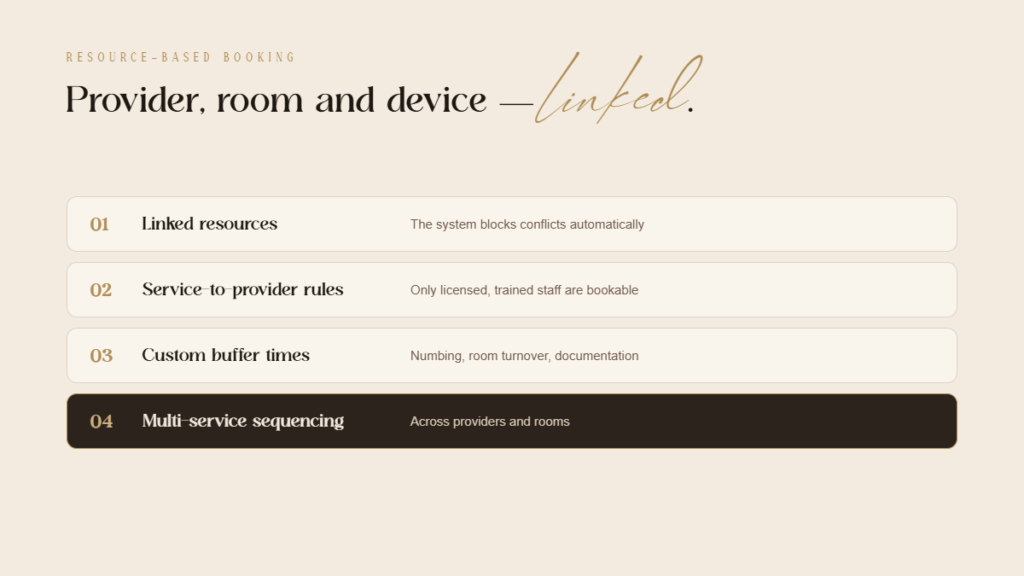
What to look for:
- Provider, room, and device booking as linked resources, so the system blocks conflicts automatically
- Service-to-provider rules that only allow bookings with staff licensed and trained for that treatment
- Custom buffer times per service for numbing, room turnover, and documentation
- Multi-service appointments that sequence treatments across providers or rooms
Why it matters: Without resource logic, front desk staff must manually check device availability and provider credentials, which is where double-bookings start.
2. Is Clinical Charting Integrated With the Schedule?
Separate booking and EMR systems force staff to re-enter information and leave gaps in the record.
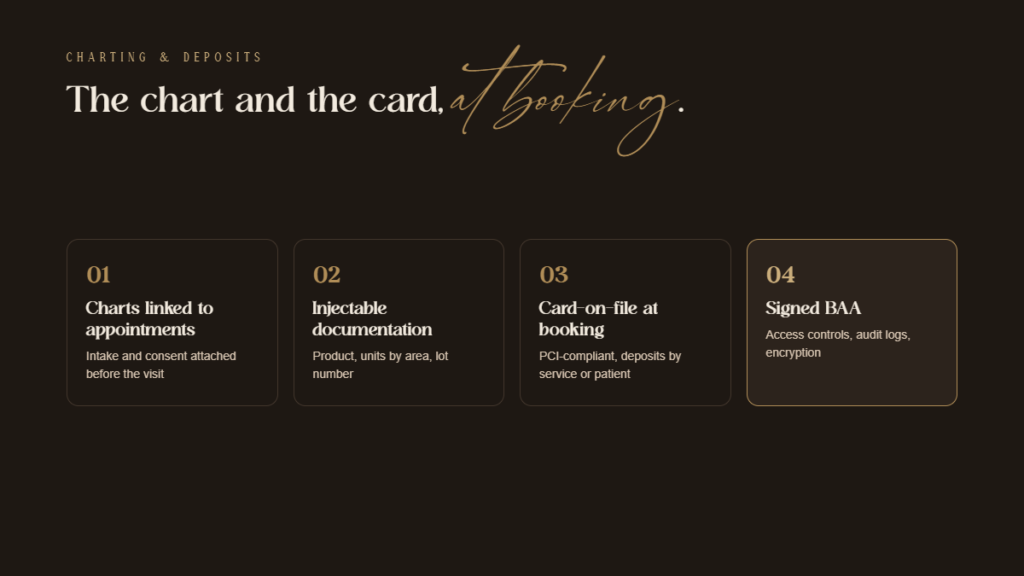
What to look for:
- Charts linked directly to each appointment
- Digital intake and consent forms sent before the visit and attached to the patient record
- Injectable documentation that captures product, units by area, and lot number
- Before/after photo storage inside the patient chart
- Privacy safeguards including access controls, audit logs, encryption, and a mandatory health privacy contract
3. Can It Enforce Deposits and Cancellation Policies?
Zenoti’s 2026 benchmark data reported a MedSpa cancellation rate of 14 percent in 2025, with no-shows adding several more percentage points. Every empty slot is lost revenue that can’t be recovered.
What to look for:
- Card-on-file setup using secure payment storage
- Configurable deposits by service, provider, or patient type (for example, new patients or high-ticket treatments)
- Automated cancellation fee processing according to the practice’s stated policy
- Policy acknowledgment captured during online booking
4. Are Reminders, Messaging, and Waitlists Automated?
Manual confirmation calls consume hours of front desk time each week.
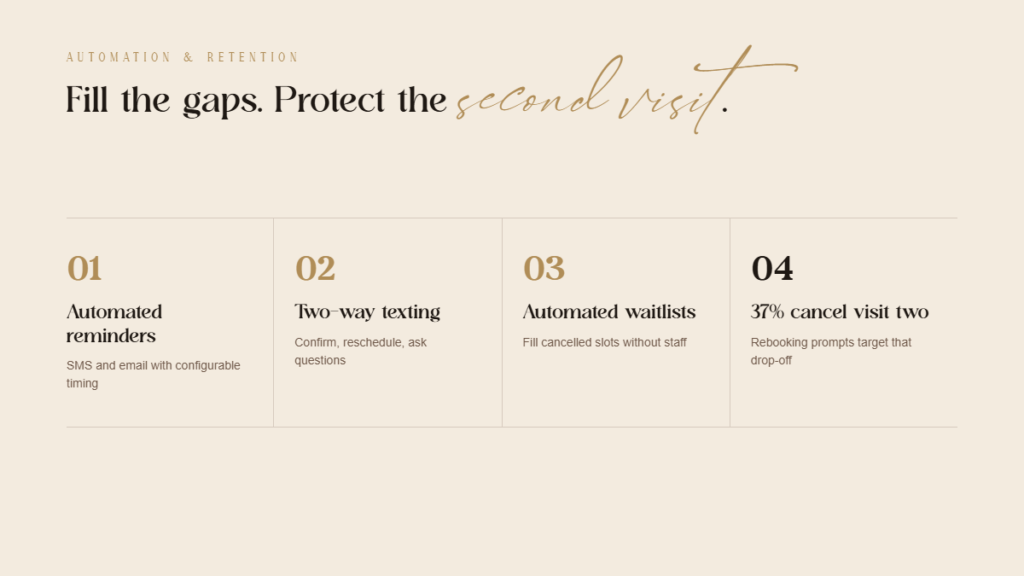
What to look for:
- Automated SMS and email reminders with configurable timing
- Two-way texting so patients can confirm, reschedule, or ask questions
- HIPAA-conscious message content that avoids unnecessary treatment details
- Automated waitlists that fill cancelled slots without staff involvement
5. Does It Support Memberships, Packages, and Retention Reporting?
MedSpa revenue depends on repeat visits. Scheduling software should actively support retention, not just record appointments.
What to look for:
- Membership and package tracking with automatic redemption at checkout
- Rebooking prompts at checkout based on treatment intervals (such as neurotoxin every three to four months)
- Reporting on room utilization, provider productivity, rebooking rate, and retention
Why it matters: The same Zenoti data found that 37 percent of patients who book a second appointment cancel before it happens. Rebooking and retention tools target exactly that drop-off.
What Else Is Worth Evaluating?
- Online booking experience on mobile, since most patients book from a phone
- Consultation booking flows for treatments that require assessment first
- Integrated payments and point-of-sale for retail skincare
- Multi-location support for growing practices
- Implementation and support quality, including data migration from the current system
The Bottom Line
MedSpa scheduling software must do far more than fill a calendar. It needs to coordinate providers, rooms, and devices; protect patient data; enforce financial policies; automate communication; and drive repeat visits.
Before signing any contract, request a live demo for complex days, confirm tier pricing in writing, and secure a mandatory health privacy contract.
ready to grow & scale












more
about us
For brands looking for a branding, website and social media facelift...
The Aesthetic Website

learn more
For brands looking to SCALE & GROW their existing aesthetic business with more booked appointments...
The Aesthetic Accelerator

learn more
The client retention app for brands looking to maximize their client lifetime value and increase member retention
Juvvia




we are the creators of



REQUEST BETA ACCESS
follow us
chat with us
A data-driven performance marketing agency dedicated to helping aesthetic businesses scale and grow...
We Are LeadShark System

learn more

