The ROI of Nextdoor and Local Community Ads for Neighborhood Aesthetic Practices
What to Know
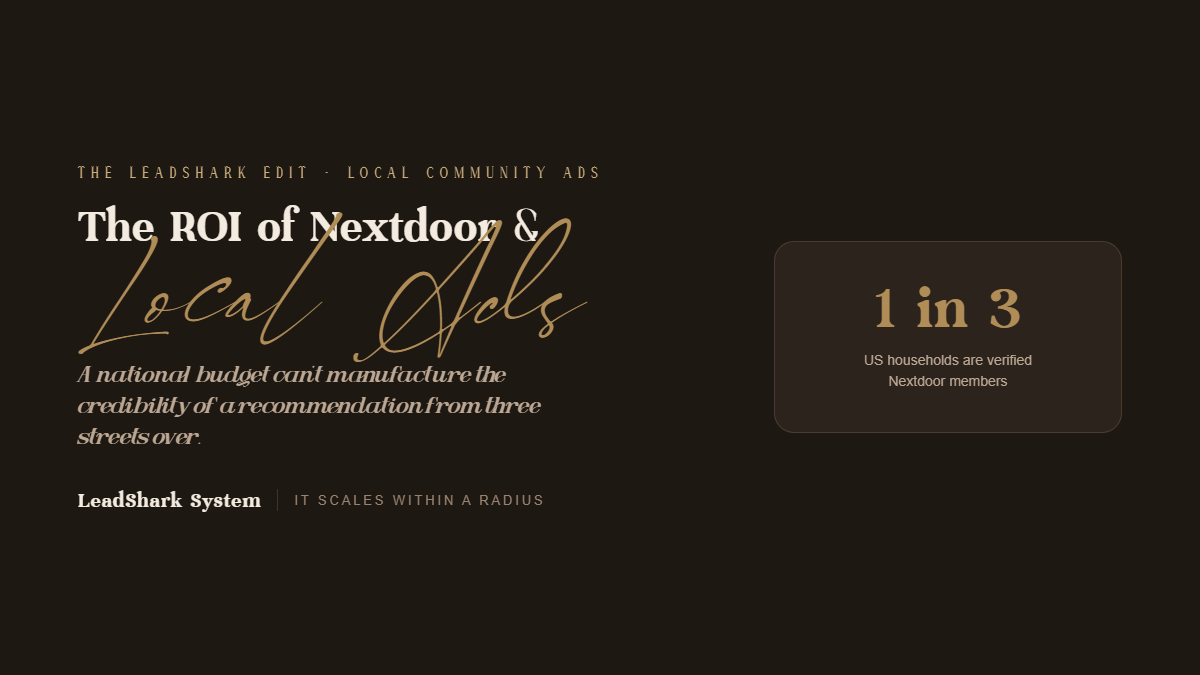
- Nextdoor reaches 1 in 3 US households with address-verified neighbors. A recommendation on Nextdoor from someone in the same zip code carries more trust than 50 anonymous Google reviews. Most MedSpas have never claimed their listing.
- The ROI from Nextdoor isn’t primarily in the paid ads. It’s in the recommendation engine: when a neighbor asks for a MedSpa referral in the area, businesses nearby can respond directly. Practices that respond to these requests consistently report some of their lowest-cost new patient acquisitions.
- Local community advertising fills a gap that Meta and Google cannot. A national ad budget cannot manufacture the credibility that comes from being recommended by the neighbor three streets over. This channel doesn’t scale nationally. It scales within a radius.
Local community platforms are underused given their return per dollar. The reason is simple: national ad budgets cannot replicate hyper-local trust. When neighbors recommend a practice on Nextdoor, those leads convert far faster than typical social media ad leads.
What Makes Nextdoor and Local Community Platforms Different From National Channels?
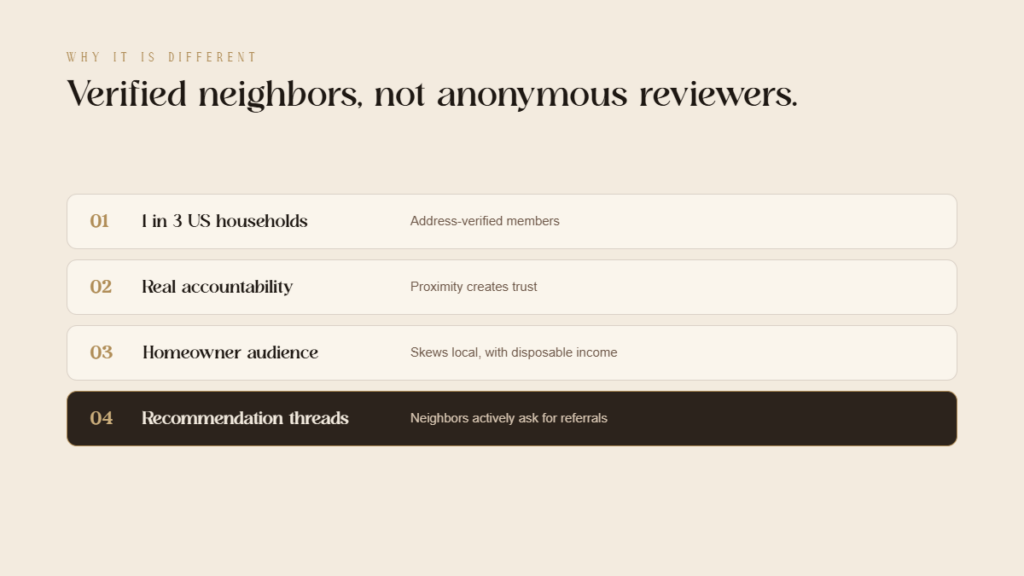
Why it matters: Most ad platforms target demographics or interests. Nextdoor targets by verified home address, creating immediate trust.
Real accountability: A neighbor recommending a practice is a verified local, not an anonymous reviewer. Proximity creates trust.
High-value audience: Over 33% of US households are on Nextdoor, skewing heavily toward local homeowners with disposable income.
Local groups work similarly: Community Facebook groups feature residents actively asking for local business recommendations.
The trust gap: Traditional ads look like sales pitches; community recommendations do not. Word-of-mouth trust compounds over time.
What Is the Actual ROI of Nextdoor for a MedSpa?
The big picture: Organic community interactions perform on a completely different level than paid ad placements.
High organic return: When locals ask for recommendations, claimed business pages can reply directly for free.
Unclaimed listings miss out: Most practices never claim their page, ignoring the warmest potential leads in their neighborhood.
High engagement threads: A single positive referral thread can reach hundreds of nearby residents.
Paid ads supplement, not replace: Paid placements work best for limited-time offers or new launches rather than ongoing trust-building.
Bottom line: Active participation on Nextdoor yields some of the lowest patient acquisition costs across all marketing channels.
What Should the Free Organic Strategy Look Like Before Any Paid Budget Is Committed?
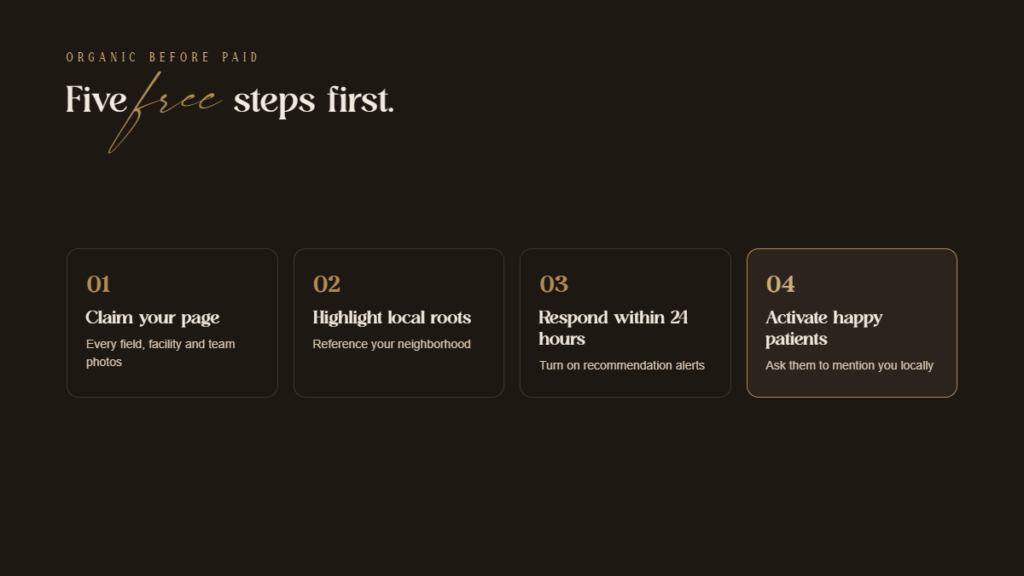
By the numbers: Five simple steps establish a strong organic presence before spending a dollar on ads.
1. Claim your page: Fill out all profile fields and upload photos of your facility and team.
2. Highlight local roots: Write a business description that references your neighborhood and community ties.
3. Respond quickly: Turn on notification alerts and reply warmly to local recommendation threads within 24 hours.
4. Activate happy patients: Ask satisfied patients to mention your practice on local community feeds.
5. Post community updates: Share periodic updates like provider news or seasonal specials without hard selling.
When Do Paid Nextdoor Ads Actually Make Sense?
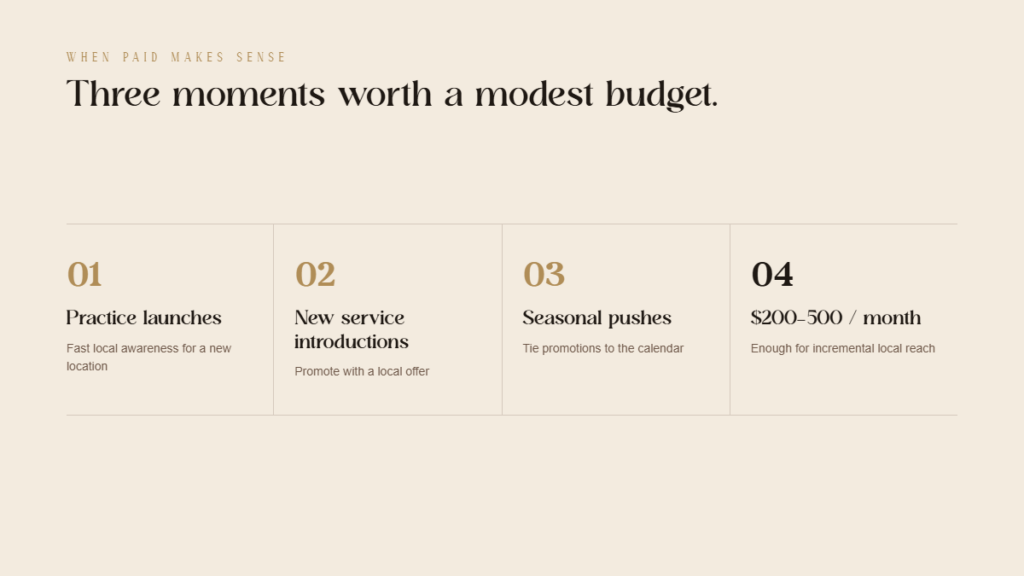
When to pay: Reserve paid ad budgets for three specific scenarios:
Practice launches: Build fast local awareness when opening a new location.
New service introductions: Promote new treatments with specific local offers.
Seasonal pushes: Run timely promotions tied to upcoming holidays or seasons.
Recommended spend: A modest monthly budget of $200 to $500 is usually enough for incremental local reach.
What Other Local Community Channels Belong in the Mix?
Beyond Nextdoor: Explore these additional local channels to strengthen neighborhood presence:
Local Facebook groups: Answer community questions naturally and respond to recommendation threads.
Community event sponsorships: Sponsor local fundraisers or charity events that include digital newsletter shoutouts.
Neighborhood newsletters: Place ads in trusted local digital newsletters with active local readerships.
Local micro-influencers: Partner with neighborhood creators who hold genuine trust with local followers.
What Mistakes Practices Make on These Platforms?
What to avoid: Three common mistakes undermine local community ROI:
Hard selling: Avoid posting overly aggressive sales pitches in neighborhood groups.
Ignoring notifications: Failing to monitor and respond promptly to recommendation requests wastes prime opportunities.
Skipping patient asks: Not inviting happy patients to recommend you leaves word-of-mouth growth to chance.
The Bottom Line
The takeaway: Community channels make all other marketing work better by establishing trust upfront. Patients who recognize your name from local word-of-mouth convert faster.
Low cost, high impact: Maintaining an organic community strategy requires minimal effort and delivers some of the lowest patient acquisition costs in the stack.
Get started: Most competitors neglect local community strategies. Visit LeadShark System to learn how we help practices dominate their local markets.
ready to grow & scale








more
about us
For brands looking for a branding, website and social media facelift...
The Aesthetic Website

learn more
For brands looking to SCALE & GROW their existing aesthetic business with more booked appointments...
The Aesthetic Accelerator

learn more
The client retention app for brands looking to maximize their client lifetime value and increase member retention
Juvvia




we are the creators of


REQUEST BETA ACCESS
follow us
chat with us
A data-driven performance marketing agency dedicated to helping aesthetic businesses scale and grow...
We Are LeadShark System

learn more

