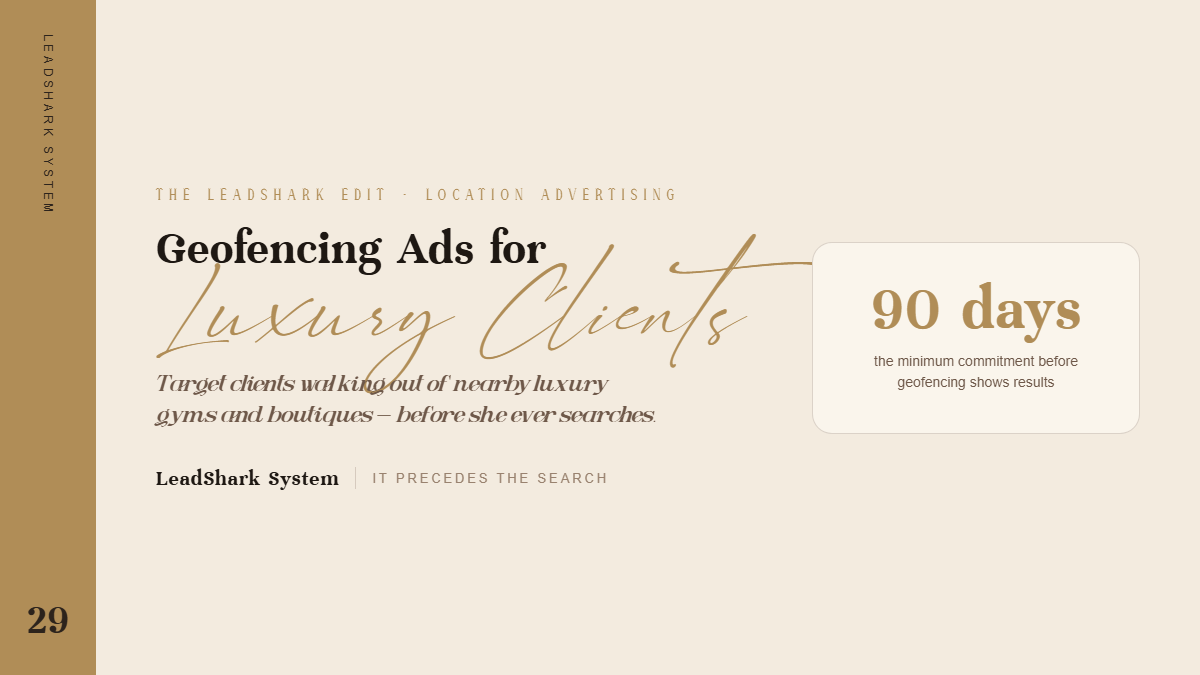
MedSpa Geofencing: How to Target High-Value Aesthetic Clients Walking Out of Nearby Luxury Gyms and Boutiques
Why It Matters
- Geofencing targets real-world patient behavior by reaching prospective MedSpa clients based on the high-end aesthetic proxy locations they visit daily, like luxury fitness studios and designer boutiques, rather than relying solely on broad online demographics.
- Location selection drives MedSpa ROI while keeping your practice HIPAA-compliant. Target high-value lifestyle locations like luxury gyms and upscale retail, but strictly avoid competitor cosmetic clinics to prevent HIPAA and FTC privacy risks.
- It works best as a feeder system alongside active Google Search and Meta ad campaigns for Botox, fillers, and body contouring, building upstream brand awareness that lowers CPL and boosts consultation booking rates.
Geofencing reaches potential MedSpa patients before they actively search for Botox, fillers, or body sculpting on Google. While highly effective for medical aesthetic patient acquisition, it carries specific HIPAA compliance risks and demands tailored creative strategy. Here is what MedSpa owners and aesthetic directors need to know.
What Is Geofencing and How Does It Actually Work?
A geofence is a virtual boundary placed around a physical location like Equinox, a boutique salon, or an upscale shopping center. When a prospective patient enters that area with location services active, their smartphone ID is saved to a custom MedSpa audience. You can then serve targeted ads across mobile apps and websites for days or weeks after their visit.
The mechanism in practical terms:
Real-world scenario: A prospect finishes a workout at a local Pilates studio. As she leaves, her smartphone enters your virtual boundary, adding her device to your audience list. Over the next few days, she sees ads for CoolSculpting or facial rejuvenation while checking news or weather apps—building brand awareness before she ever searches for “botox near me.”
The look-back window defines how long a captured device stays in your target list (e.g., 7 days vs. 30 days). Shorter windows (3–7 days) capture prospects while wellness motivation is high. Longer windows (30 days) build familiarity for higher-ticket treatments like skin tightening.
Geofencing targets specific behavior rather than broad zip codes. Instead of spending budget on everyone within 5 miles, your ad spend focuses exclusively on people who visit luxury, self-care, and wellness spots in your area.
Which Locations Should an Aesthetic Practice Geofence?
Location selection defines campaign success. Broad or improper locations waste ad spend on low-intent viewers. Pinpointing upscale lifestyle spots builds a reliable pipeline of affluent prospects ready for cosmetic treatments.
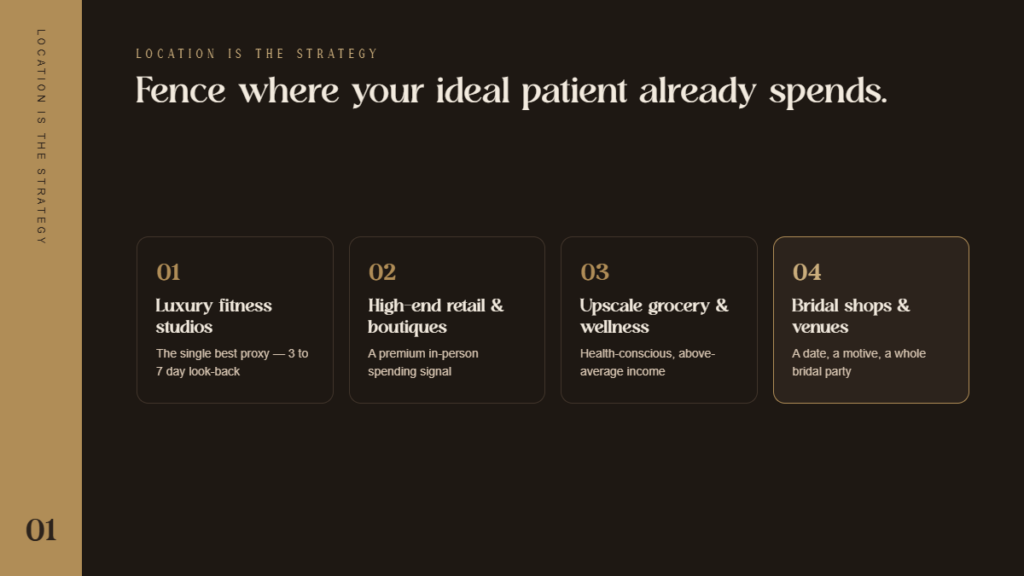
Top-performing geofence location categories for MedSpas:
Luxury fitness studios offer the highest-converting target audience. Clients paying premium rates at boutique gyms prioritize health, appearance, and personal care, giving them high disposable income for non-invasive aesthetic procedures.
- Fence specific physical locations, not brand names nationally. An Equinox in an affluent suburban center targets a far higher-value aesthetic prospect than a location adjacent to a college campus. Pinpoint exact addresses within your MedSpa’s primary drive-time radius.
- 3 to 7-day look-back window. Frequent gym-goers return multiple times a week, allowing repeated exposure to ads for body sculpting or collagen-stimulating treatments while their mind is on fitness and self-improvement.
High-end beauty & retail boutiques highlight active beauty spending. Visitors at stores like Sephora, Nordstrom, or top local salons spend regularly on self-care, making them prime candidates for injectables, facials, and skincare packages.
Upscale grocers capture health-conscious shoppers in affluent areas who align directly with MedSpa patient profiles seeking anti-aging and preventative aesthetic care.
Bridal shops & wedding venues reach high-intent prospects on tight deadlines. Brides and family members are motivated to look their best for events, making this ideal for pre-wedding Botox, fillers, and skin treatments.
Local events & charity galas allow you to capture device IDs during specific dates and hours. Attendees of local fundraisers or luxury summits form an ideal audience for premium lifestyle and aesthetic services.
What Are the Compliance and HIPAA Risks MedSpas Must Avoid?
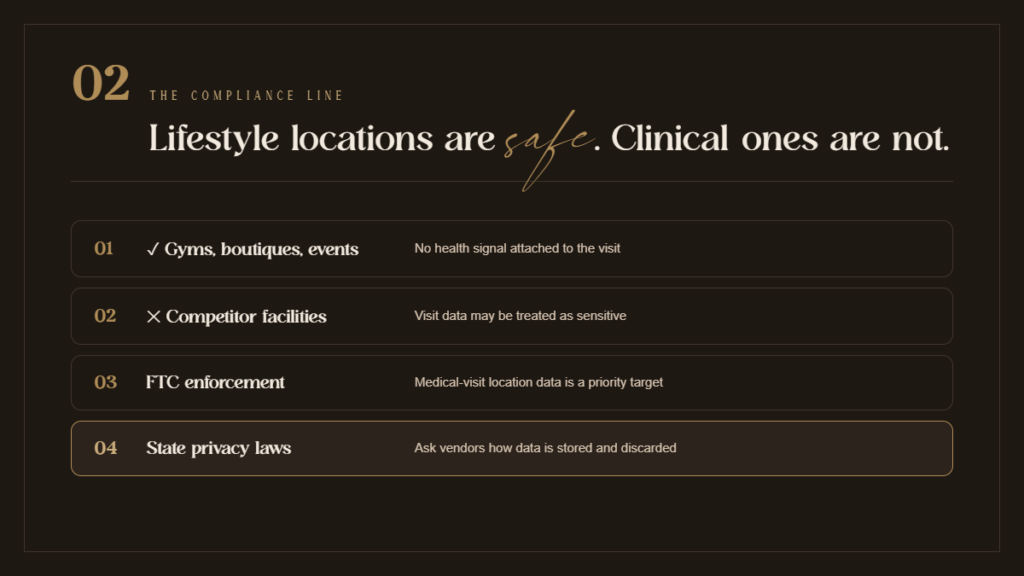
Medical privacy requires strict compliance. Many advertising agencies lack knowledge of medical privacy laws. Violating patient privacy rules risks regulatory fines and reputation damage.
Avoid tracking clinical settings. Geofencing competing MedSpas, plastic surgery centers, or medical clinics creates legal risk. Collecting location data at healthcare facilities can trigger strict HIPAA and privacy violations regarding sensitive health-location tracking.
Regulatory bodies actively monitor health data. Federal agencies scrutinize tracking near medical locations. Using health-location data for ad targeting without consent remains an enforcement priority.
Safe targets focus on lifestyle. Luxury gyms, salons, retail boutiques, and event venues carry zero medical privacy risk, as location tracking in these areas has no link to medical history or clinical care.
High-risk locations to avoid: Hospitals, specialty clinics, plastic surgery offices, and competing medical centers. Stick to high-end lifestyle spaces where prospects spend leisure time.
State privacy laws apply. Ensure your vendor complies with state privacy acts, anonymizes device IDs, and provides simple opt-out processes.
What Ad Creative Converts Location Context into Aesthetic Consultations?
Creative strategy drives consultation bookings. While location tracking captures mobile views, your offer and ad visual determine whether prospects convert into consultation appointments.
Align ad messaging with lifestyle context. A prospect leaving a fitness class is already focused on body goals. Position your treatment as a complementary addition to her wellness routine.
- “You work hard for your body. Here is how we target stubborn areas.” Speaks directly to gym-goers without explicitly mentioning the gym. Positions EMSCULPT Neo or CoolSculpting as a complementary enhancement to their workout routine.
- “Post-workout glow, year-round. Glow from within.” Connects active lifestyle habits to hydrafacials, RF microneedling, or laser skin treatments.
- “Natural-looking rejuvenation for busy professionals.” Appeals to high-earning retail or salon visitors seeking zero-downtime wrinkle relaxers or subtle lip filler enhancements.
Essential elements of high-converting MedSpa ad creative:
- A single, specific aesthetic offer. Geofenced audiences are top-of-funnel. Generic brand ads get ignored. Lead with a compelling entry offer—such as “$100 off your first Botox treatment” or a complimentary consultation package—to drive immediate engagement.
- Mobile-first visual clarity. Geofenced ads appear on mobile screens. Use clean, high-contrast aesthetic imagery, clear before-and-after style typography (where permitted), and straightforward call-to-action buttons like “Claim Offer” or “Book Consultation.”
- Dedicated treatment landing page. Direct clicks to a focused landing page matching the specific offer (e.g., a dedicated page for dermal fillers or body contouring with social proof and online booking) rather than your general MedSpa homepage.
Recommended ad formats for MedSpa geofencing:
- Mobile Banners (300×250 & 320×50): Deliver reliable coverage across popular apps and sites.
- Short Video Ads (15 Seconds): Highlight clinic interiors, provider experience, or patient stories to build trust quickly.
- Smart TV Retargeting: Reach captured device owners on their home TVs, reinforcing your brand in affluent households.
What Should a MedSpa Geofencing Budget and Timeline Look Like?
Geofencing builds brand preference early. It introduces your practice before prospects begin active searches, helping improve overall marketing ROI across channels.
Recommended monthly spend: Allocate $1,500 to $3,500+ monthly based on your target area density. This ensures consistent ad delivery across top local fitness and retail locations.
Minimum budget requirements: Campaigns need at least $1,500 monthly to build sufficient reach. Lower spend yields too few ad views to create brand recognition.
Optimal ad frequency: Target 4 to 7 views per captured device over a 7-day period. This level builds recognition without feeling intrusive.
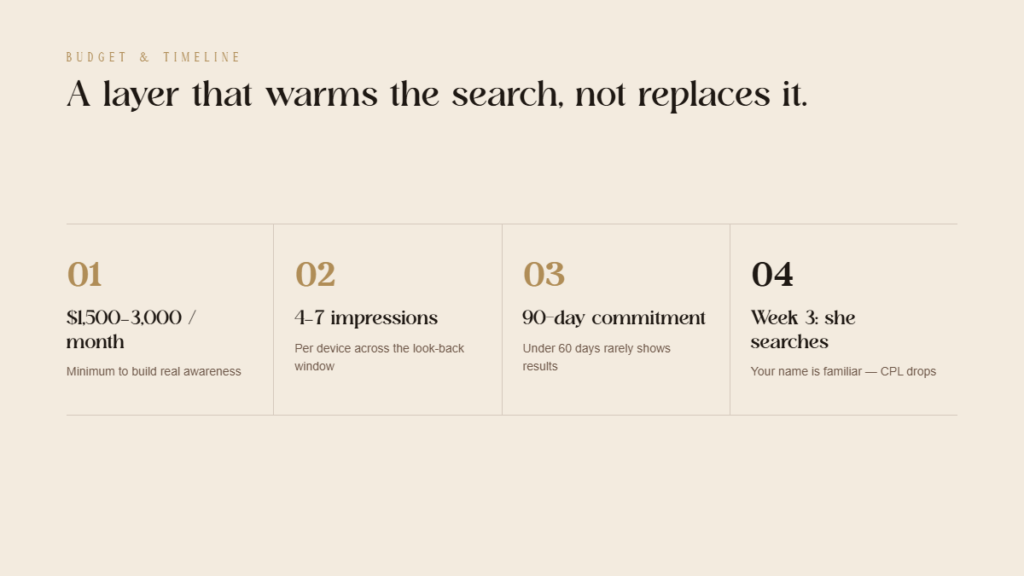
90-day minimum timeline: Aesthetic decisions take time. A 90-day window provides the necessary duration to measure patient pipeline growth accurately.
Key metrics to track MedSpa performance:
- Landing page conversions & form fills. Tracks direct online appointment requests.
- Dynamic call tracking numbers. Track direct phone bookings generated from geofence ad placements.
- In-person visit tracking: Measures devices captured at target locations (e.g., luxury gyms) that later visit your MedSpa clinic.
How Does Geofencing Fit Into a MedSpa Marketing Strategy?
Geofencing strengthens existing marketing. It complements Search and Social ads by building awareness before prospects begin comparing local options.
The multi-touch patient journey in action:
- Week 1: A prospective patient sees a display ad for your MedSpa’s wrinkle relaxers after leaving a boutique fitness class. She registers the clinic’s name.
- Week 2: She sees your video ad featuring your injector’s expertise while browsing news online. Familiarity grows.
- Week 3: Ready for a treatment, she searches “best MedSpa for fillers near me” on Google. Your practice’s Search ad appears. Recognizing your brand name from geofencing impressions, she clicks your ad over competitors and books a consultation.
Early awareness lowers acquisition costs. By introducing your brand upstream, prospects recognize your practice during active searches, improving click rates and lowering Cost Per Lead (CPL).
Without geofencing upstream, your Google Search ads compete for cold prospects purely on price or ranking position. By building awareness prior to the search, geofencing drives higher click-through rates, lowers Cost Per Lead (CPL), and improves consultation conversion rates.
Ideal scenarios to add geofencing to your MedSpa media mix:
- Core Search and Meta ads are already optimized and your MedSpa is ready to expand reach to local high-net-worth prospects.
- Your local market is highly competitive, driving up Google Search Cost-Per-Click (CPC) for terms like “Botox” or “CoolSculpting.”
- Opening a new MedSpa location or introducing high-ticket aesthetic equipment (e.g., EMSCULPT, Sciton, Morpheus8) that needs rapid brand awareness in surrounding affluent neighborhoods.
The Bottom Line
MedSpa geofencing doesn’t wait for a patient to search—it builds brand authority before intent is even expressed on Google. A prospective client who recognizes your aesthetic practice from mobile impressions after her workouts converts at a significantly higher rate when she decides to book cosmetic treatments.
Location selection is your primary strategy. Focus on luxury gyms, high-end boutiques, salons, and bridal venues to attract ideal MedSpa demographics without HIPAA or health-privacy risks. Pair compliant targeting with compelling aesthetic offers, mobile-optimized landing pages, and a 90-day campaign horizon to maximize ROI.
Geofencing is an aesthetic client acquisition channel that compounds over time. Captured audiences build familiarity, and integrated search campaigns close the warm leads. Our team at LeadShark System builds tailored geofencing strategies layered into complete marketing ecosystems for ambitious MedSpas ready to scale patient revenue. If you’re ready to capture local high-value aesthetic clients, let’s connect.
ready to grow & scale









more
about us
For brands looking for a branding, website and social media facelift...
The Aesthetic Website

learn more
For brands looking to SCALE & GROW their existing aesthetic business with more booked appointments...
The Aesthetic Accelerator

learn more
The client retention app for brands looking to maximize their client lifetime value and increase member retention
Juvvia




we are the creators of


REQUEST BETA ACCESS
follow us
chat with us
A data-driven performance marketing agency dedicated to helping aesthetic businesses scale and grow...
We Are LeadShark System
learn more

