YouTube Pre-Roll Ads for Med Spas: How Video Marketing Captures High-Intent Patients
What to Know
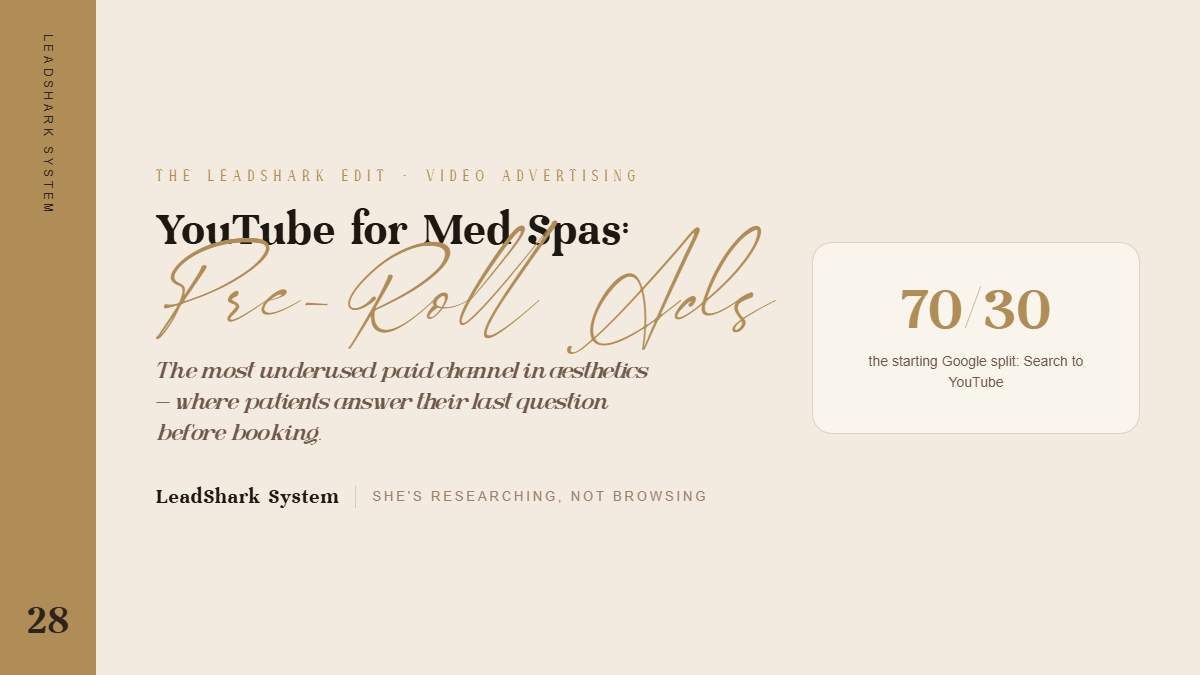
- YouTube is the second largest search engine in the world. When a patient searches “Morpheus8 before and after” or “how does Sculptra work” on YouTube, she is in research mode, not discovery mode. That distinction changes how every element of the ad should be built.
- YouTube pre-roll ads run through Google Ads, which means they can be layered with Search campaigns, Custom Intent audiences, and website remarketing in ways Meta’s ecosystem cannot replicate. The cross-channel sequence is the real advantage.
- The first five seconds of a skippable pre-roll determine whether anyone watches the rest of it. No other format in paid advertising has a harder attention threshold to clear in less time.
In building multi-channel acquisition systems for MedSpa practices, YouTube remains the most underused paid channel in the category. Most practices don’t run here because video feels expensive and the results feel harder to attribute than a Meta lead form or a Google call. Both assumptions are wrong. Here is what the channel actually looks like when it’s built correctly.
Why Does YouTube Reach a Different Patient Than Meta or TikTok?
Why it matters: Platform intent determines patient acquisition costs. TikTok captures passive scrollers, and Meta targets defined user profiles. YouTube serves patients actively searching for answers, delivering higher intent and faster conversion cycles.
- High-Intent Research: A patient searching “Sculptra before and after” is researching treatment details, recovery timelines, and ROI. A 60-second provider video answers her specific questions in real time.
- Shorter Conversion Windows: Because YouTube intent mimics Google Search, patients require fewer touchpoints to book a consultation.
Low Production Barrier: A direct, authentic provider explanation on camera consistently outperforms polished agency videos.
Which YouTube Ad Format Works Best for MedSpas?
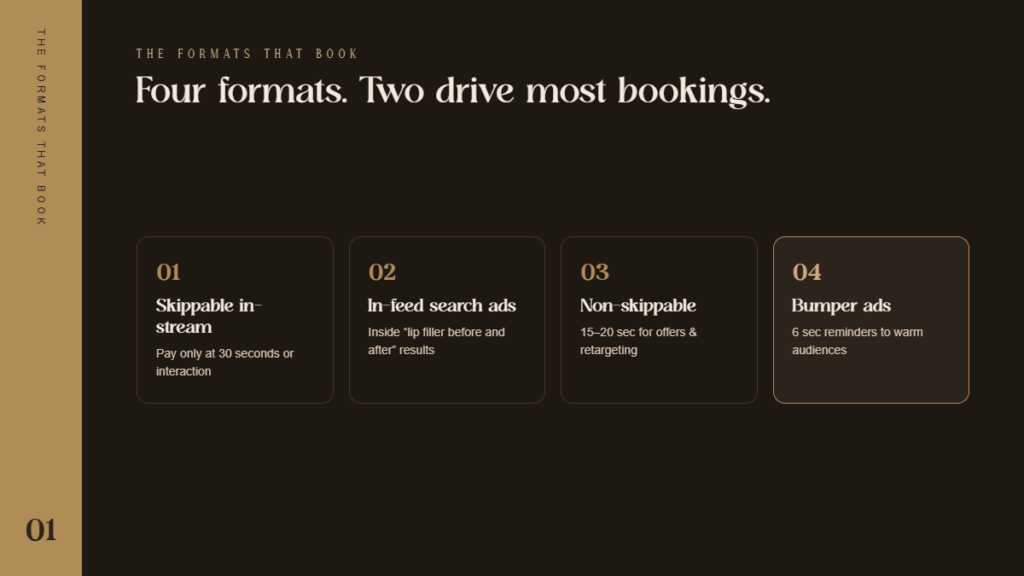
By the numbers: Four video formats exist, but two drive the vast majority of patient bookings.
- Skippable In-Stream (Primary): Plays before videos and can be skipped after 5 seconds. Practices only pay if the viewer watches 30 seconds or interacts, giving free brand exposure on shorter views.
- In-Feed Search Ads (Highest Intent): Appears directly inside search results when patients search terms like “lip filler before and after.” Clicks signal explicit viewing intent.
- Non-Skippable Ads (Secondary): 15–20 second unskippable clips designed for direct seasonal offers or retargeting.
- Bumper Ads (Supporting): 6-second clips used strictly to remind warm audiences to book.
How Should YouTube Ads Be Targeted for Aesthetic Treatments?
Why it matters: YouTube uses Google’s behavioral data ecosystem, making its targeting far more precise than social media alternatives.
- Keyword Search Targeting: Place video ads directly against specific YouTube searches like “Botox near me” or “Sculptra cost.”
- Custom Intent Audiences: Target YouTube users based on their recent Google Search activity for competitor or treatment keywords.
- Website Retargeting: Serve follow-up video explanations to users who visited a treatment page on your website without booking.
Placement Targeting: Run ads directly on relevant skincare and beauty YouTube channels.
What Does a High-Converting MedSpa Pre-Roll Look Like?
The big picture: The first 5 seconds dictate ad survival. Skip brand logos, slow fade-ins, or generic self-introductions, and focus strictly on immediate value.
- The direct patient question: “If you’ve been thinking about getting Morpheus8 but you’re not sure what to expect, this is what you need to hear.” The patient who has been thinking about Morpheus8 hears herself described and keeps watching.
- The outcome lead: Show the result in the first frame. A patient with visibly tightened skin, a sharper jawline, a more rested eye. The result is more compelling than any words in the first five seconds.
Hooks that don’t work:
- A logo animation. The practice brand means nothing to a cold audience in the first five seconds. Earn the watch first.
- Music that fades in. Audio that builds slowly signals that nothing important is happening yet.
- “Hi, I’m Dr. X from [Practice Name].” The patient doesn’t know Dr. X yet. There is no reason to stay.
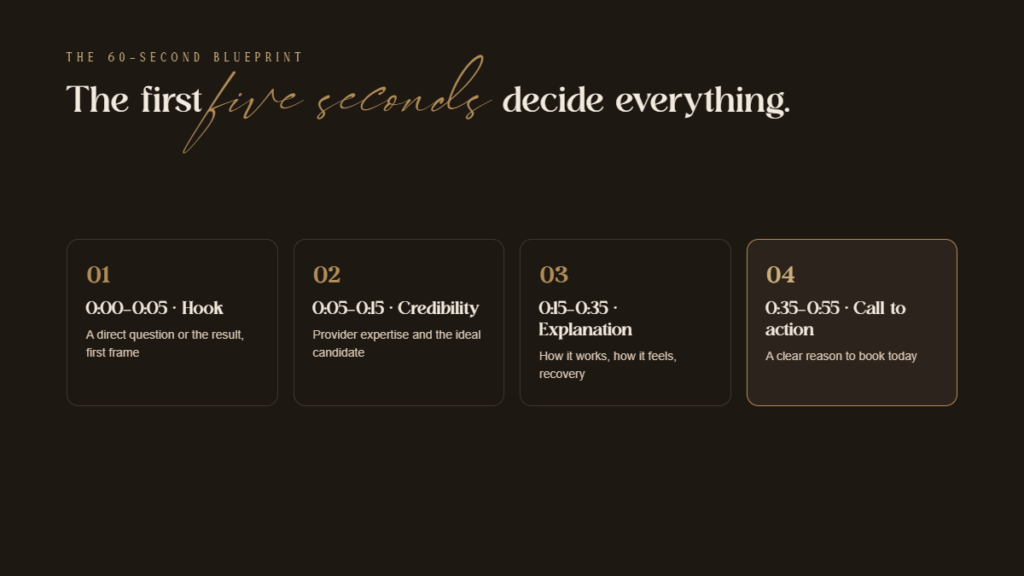
The 60-Second Winning Blueprint:
- 0:00–0:05 (The Hook): Ask a direct question or display immediate before/after results.
- 0:05–0:15 (Credibility): Establish provider expertise and identify the ideal patient candidate.
- 0:15–0:35 (Explanation): Explain how the treatment works, what it feels like, and expected recovery.
- 0:35–0:55 (Call to Action): Offer a clear reason to book a consultation today.
The production standard that converts: A provider on camera in a clean professional environment with good lighting and clear audio from a lavalier microphone. This costs under $500 to produce in-house and outperforms agency-produced content with music and b-roll in almost every test we’ve run.
How Does YouTube Fit Into the Broader Paid Acquisition Strategy?
Why it matters: YouTube works best as a middle-funnel trust layer connected directly to Google Search campaigns.
- Step 1: A prospect searches “Morpheus8 near me” on Google, clicks your Search ad, reads, and leaves without booking.
- Step 2: Later that day, the prospect opens YouTube and sees your 45-second provider video addressing that exact treatment.
- Step 3: The video builds immediate trust, leading the prospect to click through and schedule a consultation.
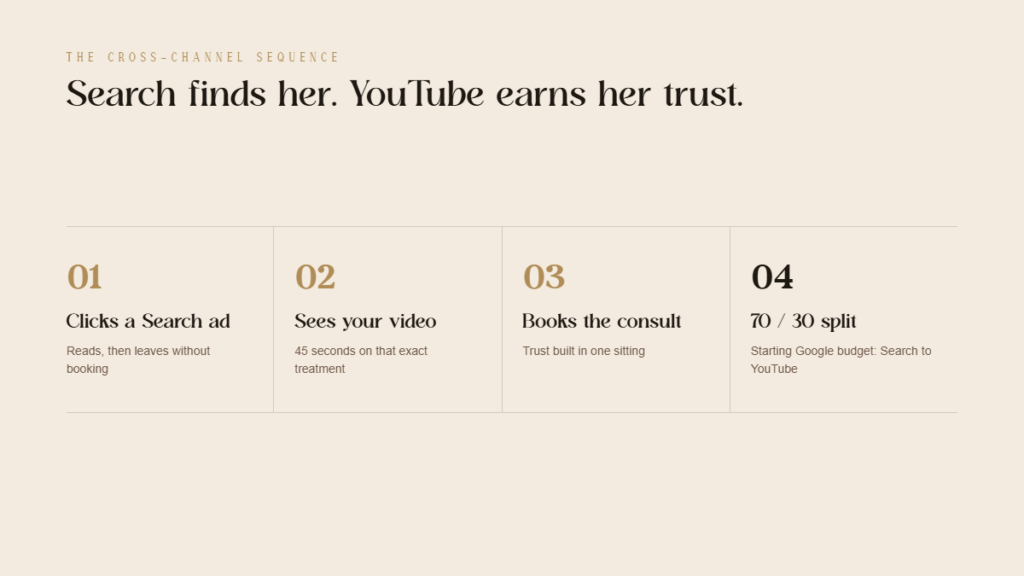
This sequence is only possible because YouTube and Google Search run through the same Google Ads account. The website visit data from the Search campaign directly powers the YouTube remarketing audience. The two channels share the same intelligence.
The budget allocation for a practice starting on YouTube: 70% of the Google Ads budget to Search campaigns, 30% to YouTube. As remarketing audiences build and custom intent audiences validate, the YouTube allocation can increase.
YouTube also builds the brand asset the other channels use. A library of provider explanation videos for each treatment serves simultaneously as YouTube ad creative, website video content, email campaign assets, and social proof for consultations. The investment produces more reusable content per dollar than any other ad format in the MedSpa category.
What Are the Compliance Considerations on YouTube?
The bottom line: Google Ads policies on YouTube are significantly more permissive than Meta for medical aesthetics. Before-and-after video content is allowed as long as claims are accurate, non-guaranteed, and landing pages follow HIPAA guidelines.
The Bottom Line
YouTube is where the patient who is almost ready to book goes to answer the last question she has before she calls. She is not browsing. She is researching. The practice that shows up in that moment with a provider who speaks directly to her specific concern, and answers the question she was already asking, wins the consultation at a fraction of the cost of a cold Meta lead.
The channel requires video. That is the barrier most practices cite and the one that most often prevents them from building here. The video format that converts is the one the provider can shoot in the practice on a Tuesday afternoon, not the one that requires a production crew.
Get the first five seconds right. Build the Google Ads infrastructure that connects YouTube remarketing to Search campaign audiences. Run the sequence. Our team at LeadShark System builds YouTube pre-roll strategies integrated with the full Google Ads ecosystem for MedSpa practices ready to meet their highest-intent patients where they’re already doing their research.
ready to grow & scale








more
about us
For brands looking for a branding, website and social media facelift...
The Aesthetic Website

learn more
For brands looking to SCALE & GROW their existing aesthetic business with more booked appointments...
The Aesthetic Accelerator

learn more
The client retention app for brands looking to maximize their client lifetime value and increase member retention
Juvvia




we are the creators of


REQUEST BETA ACCESS
follow us
chat with us
A data-driven performance marketing agency dedicated to helping aesthetic businesses scale and grow...
We Are LeadShark System

learn more

