Longevity Medicine & Prejuvenation: Marketing to Gen Z and Alpha as a Preventative Investment
What to Know
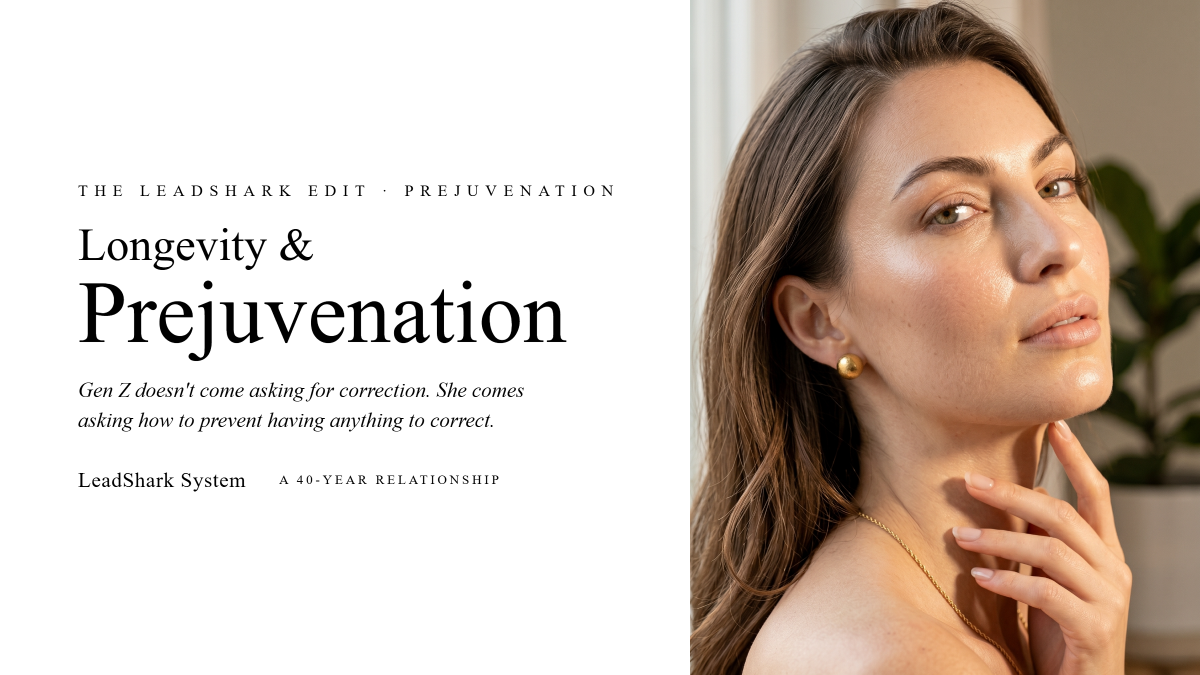
- Gen Z is already in the MedSpa market. The oldest are 29 in 2026. They’re researching on TikTok and Reddit, not Instagram and Facebook.
- They don’t come asking for correction. They come asking how to prevent having anything to correct.
- The practice that builds for this patient today is acquiring a relationship that could run 40 years. The lifetime value picture is unlike any other demographic in the category.
Gen Z is the most skincare-literate generation in history. They grew up with YouTube dermatologists and TikTok content explaining the difference between retinol and retinoids before most of them turned 18. They arrive at the consultation with more research done than the average Millennial patient. After eight years running MedSpa acquisition campaigns, we know what this patient needs and what most practices are missing to reach her.
Why Is the Prejuvenation Patient Reshaping the Revenue Model?
The math is simple: prevention is profitable.
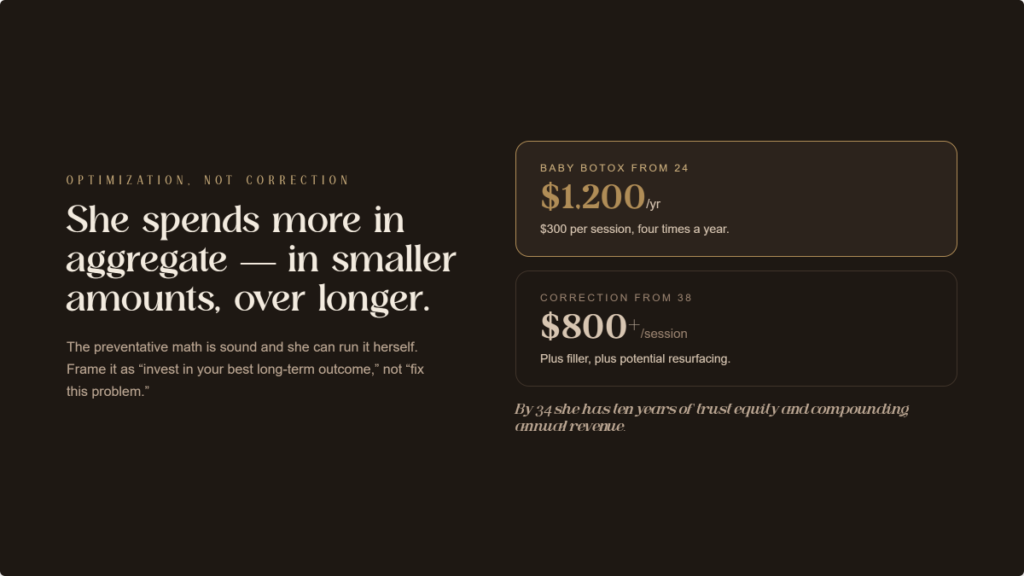
A 24-year-old who starts with light maintenance (like “baby Botox”) avoids expensive, invasive corrective work later.
- For the patient: They avoid costly, complex procedures at 40.
- For the practice: You stop chasing one-off “fix-it” appointments. You build a loyal patient who books consistently, providing a decade of predictable, compounding revenue.
Who Is the Gen Z Patient and What Does She Actually Want?
She isn’t looking to “fix” anything, she is looking to optimize.
Gen Z arrives at your practice research-heavy and tech-savvy. They evaluate your credentials and content, not your glossy brochure.
- Frame it as an investment: Use language like “invest in your best long-term outcome,” not “fix this problem.”
- They run the math: They know preventative care now is cheaper than corrective surgery later. Use data to show them the long-term savings.
- They want clinical, not “spa”: They prefer a modern, evidence-based environment. Avoid fluff. Focus on transparency, ingredients, and clinical goals.
What Is Longevity Medicine and Why Is It Crossing Into MedSpa?
Longevity medicine, optimizing healthspan alongside lifespan, has moved from academia to mainstream wellness.
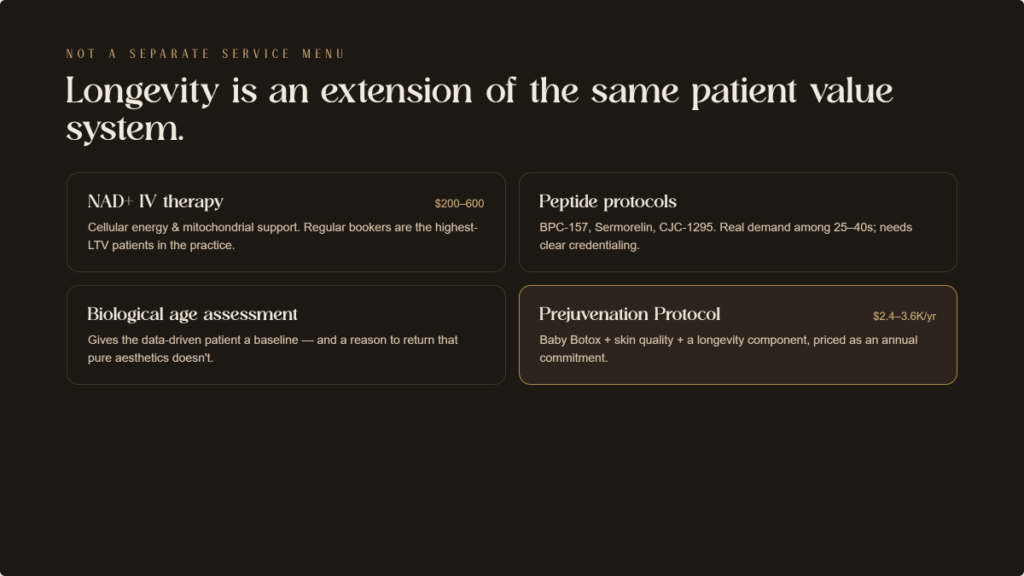
MedSpas are the natural home for the accessible longevity stack. The same patients seeking Morpheus8 are often looking for:
- NAD+ IV Therapy: High-LTV patients return regularly for cellular energy support.
- Peptide Protocols: Mainstream awareness of BPC-157 and Sermorelin is driving growth among ages 25–40.
- Biological Age Assessment: Provides data-driven patients a baseline to track clinical results.
Where Does Gen Z Actually Discover Aesthetic Providers?
Most MedSpa marketing systems are misaligned with the Gen Z discovery path.
She does not primarily use Instagram or Facebook for health and wellness discovery. She uses TikTok, YouTube, and Reddit.
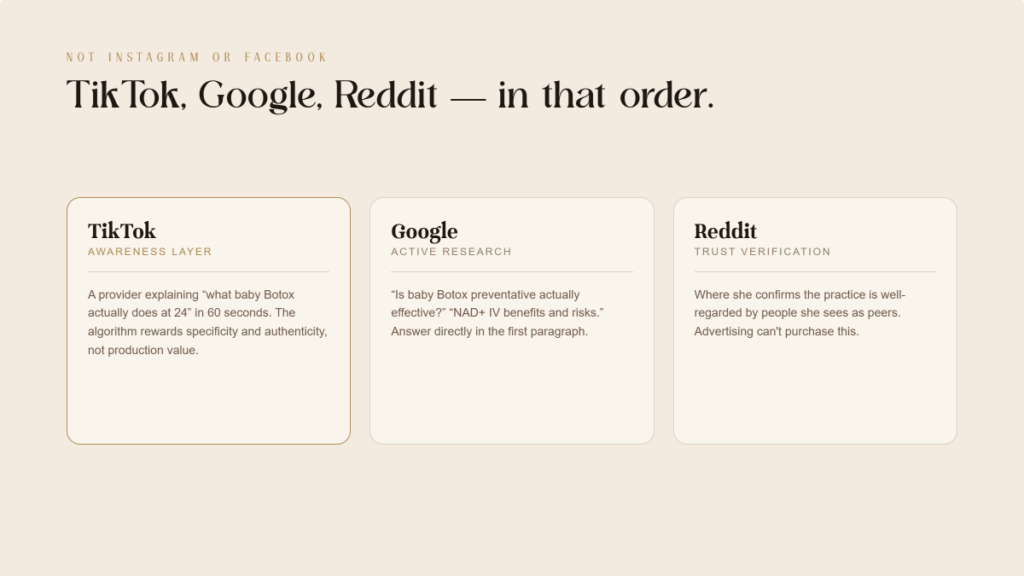
- TikTok is the awareness layer. A provider explaining “here is what baby Botox actually does at 24 and who it is actually for” in a 60-second video is reaching an audience that cannot be reached with a Meta ad. The algorithm rewards specificity and authenticity, not production value.
- Google remains critical. Gen Z searches with high specificity: “prejuvenation treatments worth it at 25,” “is baby Botox preventative actually effective,” “NAD+ IV therapy benefits and risks.” Content that answers these questions directly, in the first paragraph, captures the patient who has moved from awareness to active research.
- Reddit is the trust-verification layer. This is where she confirms that the practice she found through other channels is genuinely well-regarded by people she perceives as peers. Practices with genuine community engagement have a trust advantage that advertising cannot purchase.
What Are the Biggest Marketing Mistakes With This Demographic?
- Underestimating their knowledge: Treating Gen Z as uneducated on basics (like Botox for wrinkles) alienates them.
- Over-relying on discounts: Promotional offers attract low-value churn rather than long-term investment patients.
- Ignoring TikTok: Short-form video is the primary discovery channel for Gen Z discovery.
- Lacking clinical depth: Consultants must be ready for deep dives into peptides and preventative science.
What Should a MedSpa Build This Quarter?
- TikTok Series: Launch clinical education videos (e.g., “Baby Botox vs. Correction”). No fluff.
- Named Protocol: Bundle Botox, skin quality, and longevity services into an annual commitment.
- SEO Content: Answer high-intent queries like “Is baby Botox worth it at 25?” directly.
- Longevity Website Section: Build trust with clinical credentials and clear service philosophies.
- Consultation Framework: Train teams specifically for research-heavy prejuvenation inquiries.
The Bottom Line
Gen Z is not a future demographic. They’re in the MedSpa market now, evaluating practices based on TikTok content and Reddit threads, arriving with more research done than the average Millennial patient, and making decisions based on clinical trust and investment logic.
The practices building for this patient today are acquiring the relationship with the longest runway in the category: a patient who could spend 40 years with the same practice if the relationship is built correctly from the first visit.
Longevity medicine integration gives the MedSpa a second compelling reason to be part of that patient’s long-term health infrastructure, not just her aesthetic maintenance routine. That positioning is harder to build and harder to replicate than a promotional ad. It is also significantly more durable as a competitive advantage. Our team builds Gen Z acquisition and retention systems for forward-thinking MedSpa practices at LeadShark System.
ready to grow & scale










more
about us
For brands looking for a branding, website and social media facelift...
The Aesthetic Website

learn more
For brands looking to SCALE & GROW their existing aesthetic business with more booked appointments...
The Aesthetic Accelerator

learn more
The client retention app for brands looking to maximize their client lifetime value and increase member retention
Juvvia




we are the creators of




REQUEST BETA ACCESS
follow us
chat with us
A data-driven performance marketing agency dedicated to helping aesthetic businesses scale and grow...
We Are LeadShark System

learn more

